
When an incident unfolds, a command center may face several urgent demands at once: incoming calls, map updates, resource requests, and changing field reports. Minutes matter. An Emergency Response Command Center solution should help teams share a reliable operating picture, assign tasks clearly, and record decisions as events develop. It should also remain usable when networks are strained or staff are working across agencies. A polished dashboard alone is not enough.
Former FEMA Administrator Craig Fugate has expressed a central emergency-management principle: “All disasters are local.” That idea matters when choosing technology. The strongest platform must fit responders’ real workflows, not force every team into the same process. This guide examines seven solutions through practical criteria, including interoperability, mapping, alerting, scalability, security, and ease of training. It also considers how well each option supports coordination between dispatchers, field crews, hospitals, and public agencies. People need clarity. No system is magic. Even capable software can create friction when data is outdated, roles are unclear, or staff have not practiced using it. Those details are easy to overlook. They deserve attention. The right choice depends on incident scale, existing infrastructure, and the people expected to use it under pressure. These comparisons aim to make those trade-offs easier to see, while recognizing that no product replaces sound planning, regular exercises, or experienced judgment.
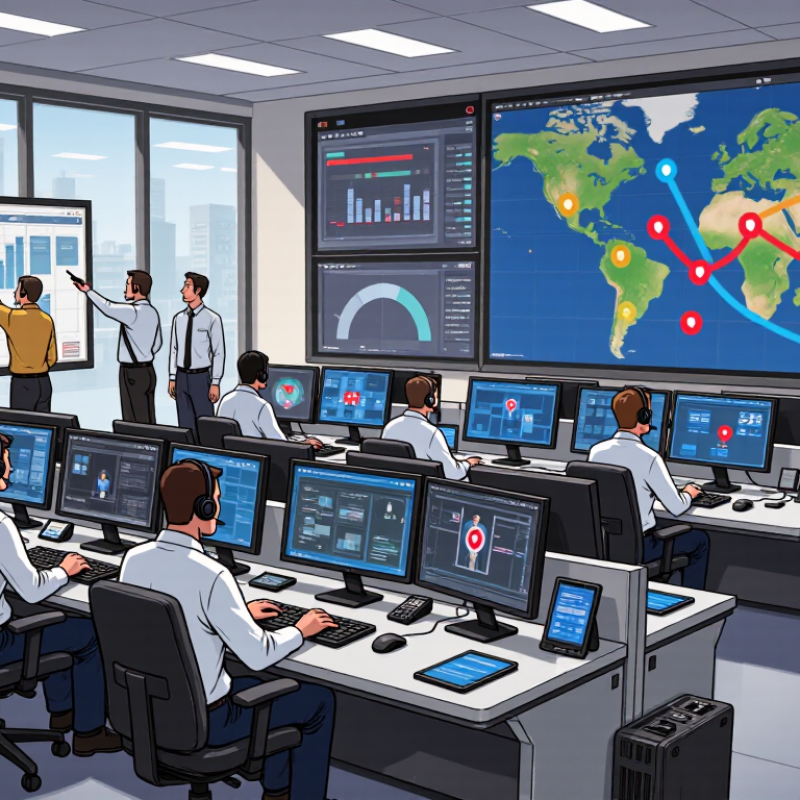
An emergency response command center turns scattered reports into coordinated action. It brings incident leaders, dispatch staff, technical specialists, and partner agencies into one operating picture. They compare incoming calls, field observations, weather alerts, and resource status. A crew waiting for access or a shelter nearing capacity can change priorities quickly. Small details matter.
The center also assigns tasks, tracks equipment and personnel, and records decisions for shift handoffs. FEMA’s National Incident Management System describes shared terminology and coordination structures that help agencies work together.
That scale shows why clear coordination matters, though a command center cannot prevent every delay or resolve incomplete information. A map may look precise while field reports conflict. Teams must question it. Good practice includes confirming critical updates, documenting uncertainty, and sharing accessible public instructions across channels.
Sources: FEMA, National Incident Management System, 2017; NOAA National Centers for Environmental Information, 2023 Billion-Dollar Weather and Climate Disasters.
Core capabilities matter most when information arrives faster than teams can interpret it. A command center should combine live incident maps, verified field reports, resource tracking, and clear task ownership in one shared operating picture. NOAA’s 2023 U.S. Billion-Dollar Weather and Climate Disasters report counted 28 qualifying events, causing an estimated $92.9 billion in losses. That scale makes timely coordination essential. Interoperable communications should let dispatchers, field crews, and partner agencies share updates even when networks are congested. Good systems also record decisions, timestamps, and handoffs, so supervisors can trace what changed and when.
Resilience is a core capability, not an optional extra. Look for backup power, offline workflows, role-based access, and tested recovery procedures. A map that freezes during an outage is not much help. Geospatial layers should distinguish confirmed hazards from unverified reports, while alerts should reach the right people without flooding every screen. One difficult trade-off remains: adding more data can create noise, not clarity. Teams should regularly test dashboards in realistic exercises and revise confusing procedures.
Tips: Run a short drill with a simulated road closure, a delayed radio update, and a sudden staffing gap. Check whether operators can identify the latest verified location, assign a crew, and document the decision within minutes. Then ask what was unclear; the answer may expose a gap the software cannot fix alone.
This comparison covers seven common solution categories used in emergency response command centers. Capability levels describe typical roles, not guarantees; actual features depend on the system, configuration, integrations, and local operating procedures.
| Solution Category | Primary Role | Incident Coordination | Dispatch Support | Public Alerts | Mapping & Location Data | Resource Tracking | Interoperability |
|---|---|---|---|---|---|---|---|
| Emergency Operations Center (EOC) Management | Coordinate multi-agency response, objectives, briefings, and situation reporting. | Core | Optional integration | Optional integration | Often integrated | Core | Agency and partner coordination |
| Computer-Aided Dispatch (CAD) | Receive calls for service, prioritize incidents, and dispatch response units. | Dispatch-focused coordination | Core | Usually a separate capability | Commonly supports mapped calls and units | Unit status and availability | Can connect with radio and records systems |
| Incident Management Software | Record incident details, assignments, actions, and operational updates. | Core | May link to dispatch systems | May link to alerting systems | Often supports incident locations | Assignments and status tracking | Supports shared workflows when connected |
| Mass Notification & Warning | Send urgent instructions and warnings through configured communication channels. | Supports public information workflows | Not typically a dispatch function | Core | May target geographic areas | Not typically a resource-tracking function | Channel availability varies by setup |
| Crisis Mapping & GIS | Display incidents, hazards, infrastructure, boundaries, and operational layers. | Provides shared geographic context | Can display calls and unit locations | May support alert-area selection | Core | Can map teams, facilities, and assets | Depends on available data feeds |
| Resource Management | Track personnel, equipment, supplies, requests, and deployment status. | Supports assignment and status reporting | May exchange unit information with dispatch | Not typically a public-alerting function | May show resource locations | Core | Can coordinate resource data across agencies |
| Interoperable Communications | Help responders and agencies communicate across radio, voice, and data systems. | Enables operational coordination | Supports dispatcher-responder communications | Public warning is generally separate | Location sharing depends on connected systems | May carry status updates from connected tools | Core |
Key: Core = the category’s primary function; Integrated = commonly connected to or included alongside related capabilities; Optional = generally provided by a separate system or configuration.
A command center platform should be judged by how well it supports decisions under pressure, not by the number of features on its dashboard. NOAA counted 28 U.S. weather and climate disasters costing at least $1 billion each in 2023, with combined losses of $92.9 billion. That scale makes shared, current information essential. Evaluate whether the platform can combine alerts, maps, field reports, and resource status without forcing staff to switch between disconnected screens.
Interoperability deserves a live test. Can dispatchers share a location, update an incident record, and pass tasks to partner agencies during a network outage? FEMA’s National Incident Management System emphasizes coordinated information sharing and common operating procedures. Check whether the platform supports those workflows, preserves timestamps, and records who changed what. A polished demo is not proof. Run a realistic exercise with noisy radio updates and incomplete reports.
Usability is a safety issue. Verizon’s 2024 Data Breach Investigations Report found that the human element was involved in 68% of breaches. Though that figure is not specific to emergency centers, it underlines the value of clear permissions and simple workflows. Ask operators to complete routine tasks during a timed drill, then review errors and confusion. Test the ugly cases. Small teams may lack time for extensive training, and even a strong platform can feel cumbersome at 3 a.m. Include cybersecurity, backup power, offline access, data retention, and vendor-independent exports in the evaluation.
Emergency response command centers rely on different tools, and no single setup fits every incident. A fixed command room offers large displays, stable power, and space for agency leads, but it may be far from the scene. A mobile command vehicle brings radios and workstations closer to responders. It is useful during remote events, though road access and setup time can limit its value.
Cloud-based incident platforms let teams share task updates across locations. Geographic mapping tools add practical context, such as blocked roads, shelter locations, and weather layers. Mass notification systems can send concise alerts to staff or the public, while interoperable communications equipment helps teams using different radio systems coordinate. Dedicated incident-management software tracks assignments and resource requests. Each option has a different role; combining them can help, but poorly maintained data creates confusion. No setup is perfect. A polished dashboard can still hide stale field reports.
Tips: Test each solution during realistic drills, including power loss and weak connectivity. Check who can update maps, confirm alerts, and record decisions. Keep a paper backup nearby. Teams sometimes overlook this. Review failures openly; one missed handoff can reveal more than a smooth demonstration.
Emergency command centers succeed through dependable deployment, not impressive dashboards alone. Start with a site survey: map radio coverage, backup power, network routes, room acoustics, and operator sightlines. Deploy in stages, then test the center during a simulated outage. A command platform must still work when a data feed fails or a building loses connectivity. Integration plans should name each system’s owner, data format, update frequency, and fallback procedure. Small gaps become visible quickly.
Resilience includes cyber controls and trained people. The 2024 Cost of a Data Breach Report put the average global breach cost at $4.88 million, up 10% from 2023; 70% of surveyed organizations reported significant disruption. The 2024 Data Breach Investigations Report found a human element in 68% of breaches. These findings support role-based access, clear shift handoffs, and regular practice. Test the seams. A polished screen can still conceal a brittle process, and no exercise catches everything.
Tips:
Run a 30-minute readiness drill each month. Have one team member cut a data feed, then track how operators detect the loss and switch to a backup. Record recovery time, missed alerts, and unclear responsibilities. Review failures without blame; repeat the drill after fixes.
It provides large displays, stable power, and space for agency leads. It may be far from the incident.
It brings radios and workstations closer to responders, especially at remote events. Narrow roads or setup delays can reduce its usefulness.
Cloud platforms share task updates across locations. Maps can show blocked roads, shelters, and weather conditions. Stale reports still cause confusion.
It should send concise messages to staff or the public. Teams should test who can approve and confirm each alert.
Test power loss and weak connectivity during realistic drills. Keep a paper backup nearby. It is easy to forget.
Name each system’s owner, data format, update frequency, and fallback procedure. Small gaps can become obvious during an outage.
A 30-minute monthly drill can reveal missed alerts and unclear responsibilities. Cut one data feed and measure recovery time.
Use role-based access, clear shift handoffs, and regular practice. Human mistakes matter. No exercise catches everything.
This article explains how an Emergency Response Command Center helps teams coordinate information, people, and resources during fast-changing incidents. It outlines core capabilities such as real-time situational awareness, incident tracking, communication, resource coordination, reporting, and decision support. It also describes how to evaluate command center platforms by considering usability, scalability, reliability, security, and the ability to support different operational needs.
The article compares seven categories of emergency response solutions, highlighting how their functions and deployment approaches may differ. It also explores integration with existing systems, staff training, operational procedures, and readiness testing. Together, these considerations help organizations assess which solution can support clear coordination, timely decisions, and effective response operations.