Choosing a vacation cabin in 2026 is about more than finding an attractive floor plan. A Prefabricated Vacation Cabin may arrive with walls, windows, and finishes assembled off-site, but the land still shapes the experience. A narrow access road, uneven ground, or limited utility connections can change the budget and schedule. Details matter.
Architect Sarah Susanka, known for her work on residential design, wrote, “The Not So Big House is not about living with less, but about living with more—more comfort, more beauty, more joy.” Her idea offers a useful lens for cabin shopping: focus on how the rooms work, not just their square footage. A warm entry for muddy boots, a window aimed at the morning light, and enough storage for wet coats can make a compact cabin feel more welcoming. Small things count.
This guide explores what buyers should compare before choosing a model, from insulation and materials to delivery, setup, and customization. It also considers how a cabin’s layout fits real routines, including cooking, sleeping, and storing outdoor gear. Ask manufacturers for written specifications, clear pricing, and details about what the quoted package excludes. A polished rendering is not a complete plan. And even careful research cannot predict every site challenge; that uncertainty deserves honest attention. The best choice is not automatically the largest or cheapest. It is the one that suits your land, climate, budget, and way of using the place. One question remains personal: will it still feel right after a rainy weekend indoors?
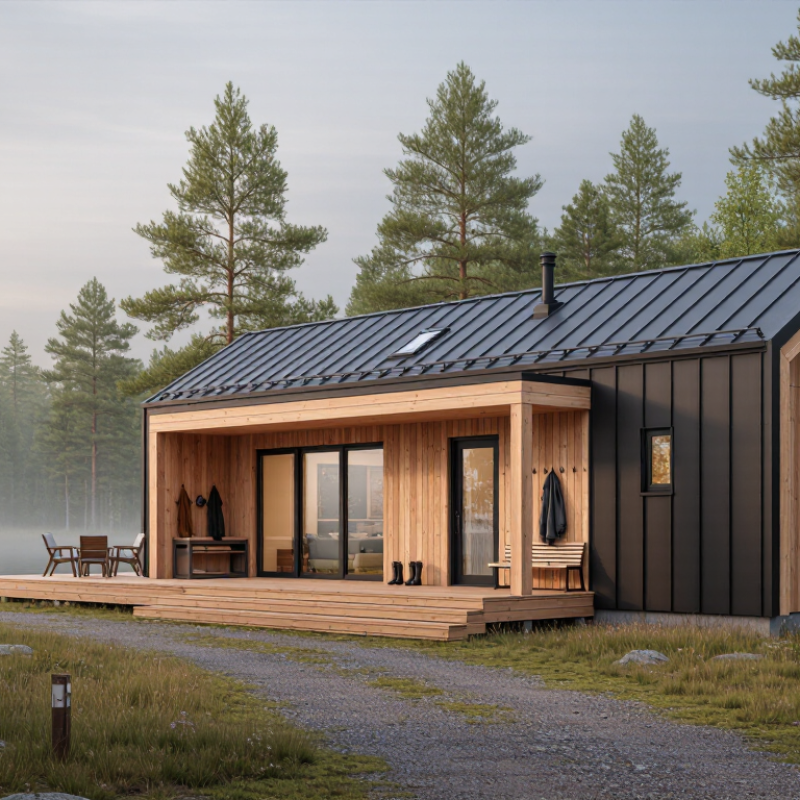
A prefabricated vacation cabin is built largely in a factory, then transported as panels or modules for assembly on a prepared site. In 2026, the label alone says little about comfort or durability. Check the drawings, insulation values, window specifications, and local snow and wind-load design. Ask how the floor, roof, and wall joints are protected from water. Those seams matter after a week of rain. Small details matter.
Factory production can shorten the on-site phase, but it does not remove site work. McKinsey’s 2019 report on modular construction found that well-executed projects could cut schedules by 20–50%; that range covers varied building types, not vacation cabins specifically. Treat it as context, not a promise. A real budget should include delivery access, foundation, crane or installation, utility connections, permits, and interior finish. The National Association of Home Builders’ construction-cost research also shows that land and site-related costs sit outside a simple building-price comparison. A cabin may look affordable on paper, yet a steep driveway or remote power connection can change the numbers. Factory-built is not automatically low-maintenance, either. Ask for component specifications and a written scope before comparing quotes.
| Cabin format | What it is | Typical delivery form | Best suited to | Key buying checks |
|---|---|---|---|---|
| Panelized cabin | Wall, floor, and roof sections are manufactured off-site and assembled at the property. | Flat-packed panels; site assembly is usually required. | Sites where access is too narrow or difficult for a fully assembled module. | Confirm what is included, who assembles the shell, and whether insulation, windows, and interior finishes are supplied. |
| Modular cabin | One or more three-dimensional sections are built in a factory and joined on-site. | Large modules transported by truck; a crane may be needed for placement. | Buyers seeking a more complete building with less on-site construction. | Check transport access, crane requirements, module joints, site preparation, and local building-code approval. |
| Cabin kit | A packaged set of components, often including pre-cut structural parts, for assembly on-site. | Bundled materials delivered for owner or contractor assembly. | Hands-on buyers with suitable building skills or access to a local contractor. | Review the full materials list, required tools, assembly instructions, and items that must be purchased separately. |
| Turnkey prefabricated cabin | A factory-built cabin supplied with many interior and exterior finishes already installed. | Delivered substantially complete; utility connections and site work are commonly separate. | Buyers prioritizing a shorter on-site build and a more predictable scope of work. | Get a written scope covering delivery, foundation, utility hookups, finishes, permits, and exclusions. |
| Seasonal-use cabin | A cabin designed primarily for use in milder weather rather than continuous year-round occupancy. | Available in panelized, kit, or modular formats. | Warm-weather retreats or properties used intermittently. | Ask about insulation, air sealing, moisture control, heating provisions, and whether the design suits local winter conditions. |
| Four-season cabin | A cabin specified for regular use across the year, with a suitable building envelope and mechanical systems. | Usually configured to meet project-specific climate and code requirements. | Cold-weather stays or frequent use in multiple seasons. | Verify insulation and window specifications, heating, ventilation, freeze protection, and local energy-code compliance. |
| Compact getaway cabin | A small-footprint layout focused on essential living space; actual size and room arrangement vary by design. | Often offered as a kit, panelized structure, or single module. | Couples, solo stays, or properties where limiting site disturbance is important. | Check usable interior area, sleeping capacity, storage, bathroom provisions, and any local minimum-size rules. |
| Family-size vacation cabin | A larger layout that typically provides separate sleeping areas and more shared living space. | May require multiple modules or a larger on-site assembly. | Families, group stays, or longer visits. | Assess bedroom layout, sanitation capacity, water and wastewater options, parking, and the site's permitted use. |
Buying note: “Prefabricated” describes how a cabin is manufactured, not whether it is automatically permitted or ready to occupy. Dimensions, included work, delivery requirements, costs, and approval rules vary by design, site, and jurisdiction. Confirm zoning, building permits, foundation requirements, access, and utility connections with the relevant local authorities before purchase.
A compact studio may work well, with one sleeping area, a kitchenette, and a sheltered porch. Less space can mean less cleaning, but rainy days may feel cramped.
Look for separate sleeping nooks, durable floors, and an entry area for muddy boots. Wet coats need somewhere to go.
Two bedrooms, extra seating, and a second bathroom can make mornings easier. Without enough space, even breakfast can feel awkward.
Check insulation, storage, internet reliability, and whether there is a proper work surface. A pretty view helps, but it cannot replace daily comfort.
Count guests, luggage, and outdoor gear, then check usable floor area. A 250-square-foot cabin may feel open with a porch, but crowded with boots and bags.
Check ceiling height, door widths, and storage on the plans. Sketch a typical day, including where groceries and wet coats will go. Small details matter.
Ask about wall and roof construction, insulation, window ratings, moisture protection, and foundation needs. Suitability depends on your climate and site, so confirm details locally.
Get a written list of included features, utility connections, assembly work, and maintenance needs. A low quote may exclude important work. I would check twice.
Choosing the best Prefabricated Vacation Cabin in 2026 starts with understanding how these cabins are designed, built, and delivered. Buyers can compare compact retreats, family-sized layouts, and flexible designs according to how they plan to use the space. Size, construction materials, insulation, windows, and included features all affect comfort, durability, and suitability for different climates and seasons.
Before making a purchase, consider the full project cost—not just the cabin price—including delivery, site preparation, utility connections, and any finishing work. Check that the intended site can accommodate the cabin and that access is practical for delivery and installation. Finally, evaluate suppliers by reviewing specifications, timelines, warranty details, and the support they provide throughout the process. A careful comparison of needs, costs, site conditions, and supplier services can help buyers choose a cabin that fits their vacation plans and budget.