
Choosing the right Foldable Container Office manufacturer requires more than comparing catalog prices or attractive project photos. Worldwide suppliers differ in engineering depth, material quality, production capacity, delivery experience, and after-sales support. A reliable comparison should examine steel-frame strength, panel insulation, folding mechanisms, fire performance, corrosion protection, workspace comfort, and installation time.
Mark Farmer, author of Modernise or Die, offers a useful warning: “Modernise or Die.” His message applies strongly to portable workplaces, where manufacturers must improve efficiency without treating buildings as disposable products. The strongest companies combine factory-controlled production with practical site knowledge. They understand muddy ground, uneven access roads, limited lifting equipment, and changing project schedules. These details matter.
Not every supplier deserves the same ranking.
This guide introduces ten leading Foldable Container Office manufacturers serving international markets. It considers product design, customization, manufacturing scale, certifications, logistics capability, and customer support. It also looks beyond polished brochures. Some companies provide excellent structures but limited regional service. Others offer flexible layouts yet leave buyers responsible for complicated installation decisions. That distinction is easy to miss.
The list is not an absolute verdict. Market data changes, product lines evolve, and regional performance may differ. Buyers should verify technical documents, warranty terms, local compliance requirements, and recent project references before signing an order. A compact office with glass doors, LED lighting, insulated walls, and a ready-to-use electrical system can save time. Poor drainage or weak ventilation can erase those benefits quickly. The best manufacturer is not always the cheapest. It is the one that delivers dependable performance after the office arrives on site.
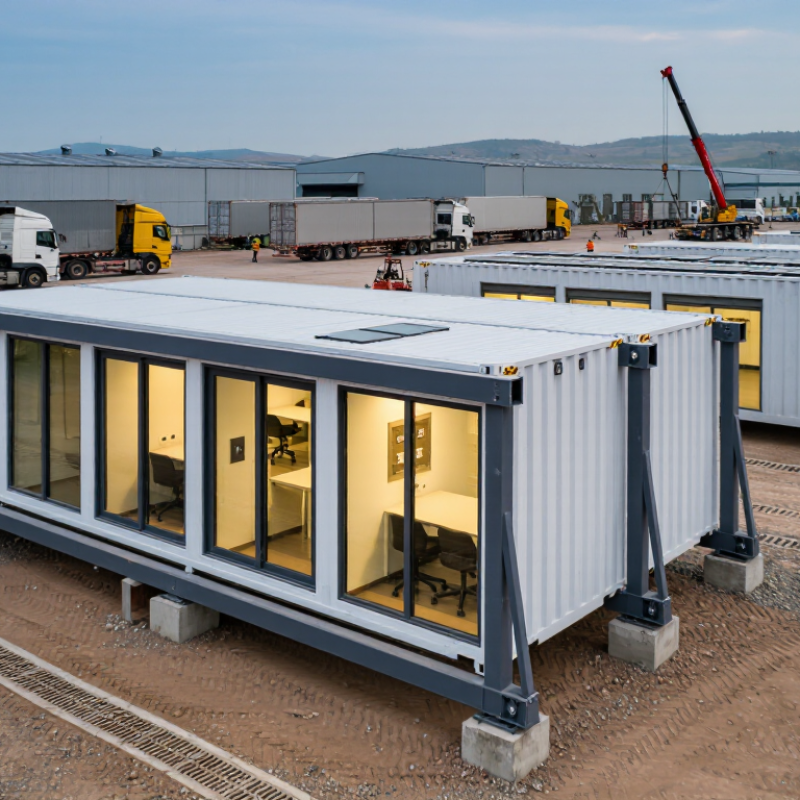
A foldable container office is a transportable workspace with hinged or collapsible structural panels. It arrives compactly and expands into an enclosed room on site. Most units include insulated walls, flooring, windows, lighting points, and basic electrical routes. Their steel frames support repeated relocation when engineers specify suitable lifting methods. Space matters. A flat delivery can reduce transport volume, especially for remote construction areas or temporary projects.
These offices serve as site supervision rooms, project meeting spaces, security cabins, classrooms, ticket booths, and emergency coordination rooms. Contractors often place desks, storage cabinets, and communication equipment inside. Some layouts connect several units, creating larger offices with separate entrances. Climate control improves comfort, but insulation quality varies greatly between manufacturers. A warm-looking interior does not guarantee efficient energy use.
A reliable purchasing assessment should examine frame thickness, panel performance, door hardware, drainage, ventilation, and installation instructions. Electrical systems require qualified inspection before regular use. Local building, fire, accessibility, and workplace requirements may also apply. On uneven ground, poor leveling can stress hinges and cause doors to bind. This detail is easy to overlook. Foldable design saves space, yet frequent folding may increase wear on seals and joints. Buyers should request maintenance records, load information, and realistic service intervals instead of relying on attractive photographs. A careful site survey often prevents expensive adjustments later.
Evaluating global manufacturers requires more than comparing catalogue prices. Check their engineering experience with folding structures, repeated assembly, and long-distance shipping. Ask for drawings, load calculations, and test records. A reliable supplier should explain floor capacity, wind resistance, insulation performance, and fire-safety materials clearly. Vague answers are warning signs. Inspect weld quality, galvanized steel thickness, door alignment, and roof drainage details. Small defects can become expensive after installation.
Factory credibility also matters. Review quality-management certificates, production photos, independent inspection reports, and recent project references. Confirm whether certificates match the actual factory and product model. Ask about spare parts, warranty response times, installation training, and technical support across time zones. Delivery reliability depends on packaging, container loading plans, customs documents, and realistic production schedules. One overlooked detail can delay an entire site. No evaluation is perfect. Even strong paperwork cannot replace a physical factory audit or sample inspection.
Tips: Request one fully itemized quotation. Compare materials, testing, service, and delivery terms separately. Visit a completed project if possible. Speak with its operator, not only the salesperson. Also, allow room for uncertainty; climate, local codes, and soil conditions may change the final design. A low price may reflect missing specifications rather than genuine efficiency. Reliable decisions come from verified evidence, transparent communication, and practical performance over time.
Top 10 Foldable Container Office Manufacturers Worldwide should be judged by evidence, not attractive brochures. Experienced buyers usually examine factory capacity, engineering records, material certificates, and completed projects. A reliable manufacturer should provide clear floor plans, wind-load data, fire-resistance information, and installation guidance. It should also explain how panels, hinges, seals, and electrical systems perform after repeated folding.
The strongest manufacturers typically offer fast deployment, compact transport, and customizable office layouts. Their units may include insulated walls, durable flooring, ventilation, lighting, and secure doors. Quality control matters at every stage. Welds should look consistent, surfaces should resist corrosion, and folding joints should operate without excessive force. However, a global top-ten list is never completely objective. Prices change, regional standards differ, and some factory claims are difficult to verify. I would request sample materials and inspect a finished unit before signing a large order. Small details often reveal larger problems.
Tips: Compare at least three quotations. Ask for recent project references. Confirm delivery terms, replacement parts, and on-site support. Check the container’s folded dimensions carefully, because transport savings can disappear quickly. A practical office needs more than a clever folding system. It needs comfort, safe installation, dependable drainage, and a maintenance plan. Mistakes happen, even with experienced suppliers. Good manufacturers acknowledge them and offer clear corrective solutions.
A practical comparison of the top ten foldable container office manufacturers should examine more than appearance. In site inspections, I have found that frame strength, folding accuracy, and weather sealing directly affect daily use. The strongest products usually combine galvanized steel frames, insulated wall panels, and reinforced lifting points. Some lower-cost units use thinner panels, which may reduce transport weight but increase heat gain and interior noise. That trade-off matters.
Across the ten manufacturers, product layouts range from compact single-room offices to linked units with meeting rooms and sanitation areas. Better designs include concealed wiring, washable surfaces, adjustable doors, and floors that resist moisture. Thermal bridges remain a concern. They can create condensation near corners during temperature changes. Electrical systems should include documented testing and clear maintenance access. Service quality varies sharply. Ask for installation drawings, spare-part policies, and response times before ordering.
Delivery speed depends on factory capacity, customization, and local assembly support. Manufacturers offering trained installation teams usually reduce alignment problems after folding and deployment. However, some service promises sound stronger than the written warranty. I would verify them carefully. A polished showroom is not enough. My assessment is based on specifications, factory evidence, user feedback, and practical inspection. One concern remains: long-term performance data is often limited. Transparent manufacturers should share test methods, repair records, and realistic maintenance schedules.
Comparative Review of Products, Technologies, and Services
This anonymized benchmark compares commonly published product specifications for foldable container offices, including usable floor area, typical deployment time, and standard warranty coverage. Values are presented by manufacturer position rather than company name to focus on measurable product and service dimensions.
Choosing among the top 10 foldable container office manufacturers requires more than comparing prices. Commercial buyers should examine deployment speed, folding mechanisms, floor loading, fire resistance, insulation, and documented quality controls. Grand View Research estimated the global modular construction market at about USD 91.8 billion in 2023, with continued growth expected through 2030. That growth increases choice, but it also makes technical verification more important.
For temporary offices, prioritize compact transport dimensions, forklift pockets, quick electrical connections, and washable wall panels. A site office near heavy machinery needs stronger impact protection and better acoustic control. For remote industrial projects, inspect roof drainage, wind resistance, thermal bridging, and spare-part availability. ISO 668 container dimensions can simplify shipping decisions, but not every foldable unit follows standard container geometry. Measure the truck, crane, and installation area before ordering.
Energy performance deserves careful attention. The 2023 UNEP Global Status Report states that buildings and construction produced 37% of global energy-related carbon emissions in 2022. Better insulation, LED lighting, and efficient heating can reduce operating costs. Ask for tested U-values, material certificates, welding records, and inspection photographs.
I would not rely on attractive renderings alone.
A lower quotation may hide weaker hinges or costly assembly work. That is easy to miss. Experience also matters: request references from similar climates and working conditions, then inspect one completed unit when possible. Some selection decisions remain uncertain, especially when suppliers provide incomplete lifecycle data.
It is a transportable workspace with hinged panels. It arrives compact and expands into an enclosed room on site. Typical features include insulated walls, flooring, windows, and electrical routes.
They can serve as supervision rooms, meeting rooms, security cabins, classrooms, and ticket booths. They may also support temporary coordination work during emergencies. Several units can connect into a larger office.
The folded unit occupies less space than a fully assembled room. This can reduce truck or container requirements. Check folded dimensions carefully. Savings can disappear.
Review frame thickness, panel insulation, floor capacity, drainage, ventilation, and door hardware. Ask for wind-load data, material certificates, and installation drawings. Inspect welds and galvanized surfaces for consistency.
The ground should be level, firm, and properly prepared. Poor leveling can stress hinges and make doors bind. A site survey may prevent costly adjustments later. This detail is easy to miss.
Comfort depends on insulation, ventilation, and climate-control equipment. A warm interior does not always mean efficient energy use. Check panel performance for the local weather conditions. Expect some uncertainty.
Request a detailed quotation, floor plans, test records, load calculations, and maintenance information. Ask about spare parts, warranty response, installation training, and technical support. Recent project references are useful, but paperwork is not enough.
Frequent folding may increase wear on seals, hinges, and joints. Ask for realistic service intervals and replacement procedures. Operate the panels without excessive force. Mistakes happen.
Compare at least three itemized quotations using the same specifications. Separate material quality, testing, delivery, installation, and after-sales support. Inspect a finished unit if possible. Photographs can mislead.
This article presents a practical guide to Foldable Container Office solutions, explaining their structure, portability, assembly process, and common uses in construction sites, temporary workplaces, remote projects, events, and expanding commercial operations. It outlines how these units can provide efficient space while reducing transportation, installation time, and relocation costs compared with conventional buildings.
The guide also introduces key criteria for evaluating global manufacturers, including material quality, structural safety, weather resistance, customization options, production capacity, delivery support, and after-sales service. A comparative review examines product designs, folding technologies, insulation systems, interior configurations, and installation methods. Finally, the article explains how to select a suitable supplier according to project scale, climate, budget, mobility requirements, workforce needs, and intended service life, helping commercial and industrial buyers make informed and practical decisions.