
Pack and go — why not with your home as well?
PackPrefab Homes logo
0%

When a flood, earthquake, or storm displaces families, shelter procurement becomes a race against weather and time. A Rapid Deployment Relief Shelter must do more than arrive quickly. It needs clear assembly instructions, durable materials, safe ventilation, and components that crews can carry across muddy ground. A delayed shipment or missing connector can leave a shelter unusable. Small details matter.

Disaster-shelter scholar Ian Davis is often associated with the principle, “Shelter is a process, not a product.” That idea is useful for buyers. A shelter’s value depends on transport, setup, maintenance, and the support available after delivery—not just its quoted price. Buyers should ask suppliers for documented capacity, packed dimensions, installation steps, replacement-part availability, and evidence from relevant field deployments. Where possible, teams should inspect a sample and rehearse assembly before an emergency. A brochure is not a field test.

This guide examines ten suppliers through practical purchasing questions: how quickly can they deliver, what conditions are their shelters designed for, and what assistance follows the sale? Specifications can help, but they do not tell the whole story. Local terrain, storage space, crew experience, and community needs may change the right choice. No ranking can replace careful evaluation. Use the comparisons as a starting point, then verify each supplier’s claims directly. A fast shelter is only useful when people can set it up, trust it, and live in it safely.
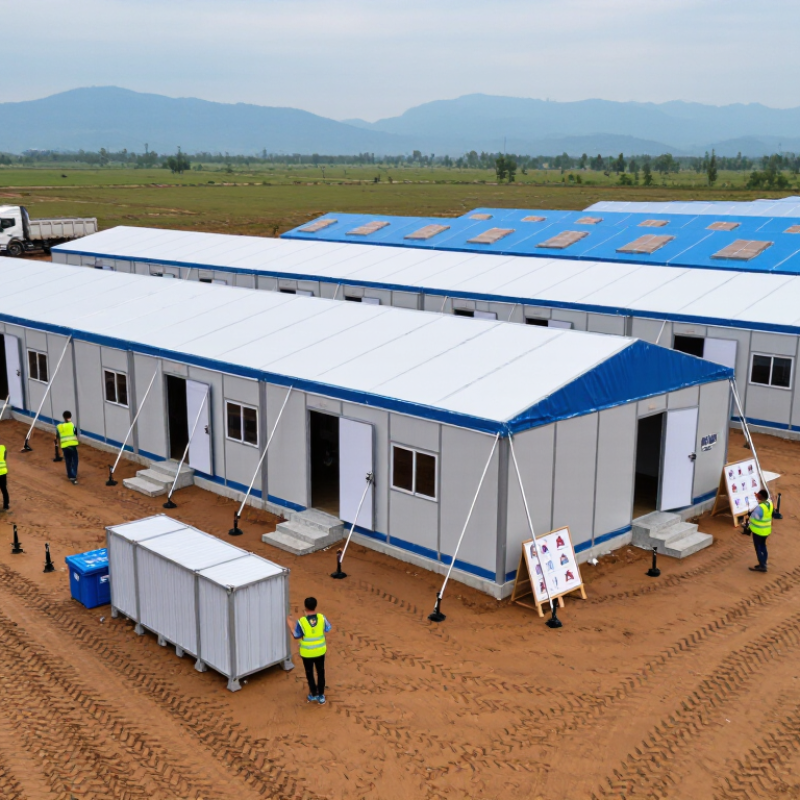
Top 10 Rapid Deployment Relief Shelter Suppliers for Buyers

What Rapid Deployment Relief Shelters Are and Where They Are Used

Rapid deployment relief shelters are temporary structures designed for quick transport, assembly, and use when homes or public buildings become unsafe. They may be family tents, modular units, or larger covered spaces for medical care and aid distribution. The form depends on local weather, site conditions, and how long people may need to stay. Speed matters. But fast installation alone does not make a shelter suitable.

These shelters are used after earthquakes, floods, storms, and other emergencies, as well as in displacement settings.

UNHCR’s Global Trends 2024 report recorded 123.2 million forcibly displaced people worldwide at the end of 2024, underscoring the scale of shelter needs.

Relief shelters can provide immediate household accommodation, temporary clinics, registration points, or protected storage near response sites. Their location matters: poor drainage can turn a floor into mud, while exposed sites may offer little protection from wind or heat.

Space and ventilation

Space and ventilation deserve attention from the start. The Sphere Handbook (2018) uses 3.5 square metres of covered living space per person as a minimum reference, with greater space sometimes needed in cold climates or urban settings. That figure is a planning guide, not a guarantee of comfort.

In practice, crowded layouts, limited privacy, and difficult maintenance can undermine an otherwise rapid response. A shelter plan can still miss what residents need.

How to Evaluate Relief Shelter Suppliers and Their Products

Evaluating relief shelter suppliers starts with the people and conditions the shelter must serve. The Sphere Handbook sets a planning reference of 3.5 square metres of covered living space per person in many contexts, excluding cooking and sanitation areas. Treat this as a benchmark, not a universal design rule. Ask suppliers for floor plans showing usable space, ventilation openings, door widths, and accessible entry points. A crowded layout can look fine on paper.

Request test records for rain penetration, wind resistance, flame performance, and repeated assembly. Check whether tests match the proposed fabric, seams, poles, and anchoring system. UNHCR’s Global Trends report counted 117.3 million forcibly displaced people at the end of 2023, underscoring the scale and urgency of displacement. Yet fast delivery alone does not make a shelter suitable. Ask for production capacity, delivery schedules, spare-part availability, repair instructions, and clear warranty terms. Get dates in writing.

Inspect a sample, not just a catalogue image. Feel the fabric, check seam finishing, and assemble the unit with staff who will use it in the field. Time the setup. Try it in rain if practical. A polished demonstration may hide awkward steps. I would also ask what failed in earlier deployments and how the supplier changed the design. One test cannot predict every site; that limitation deserves honest discussion.

Profiles of 10 Rapid Deployment Relief Shelter Suppliers

These ten supplier profiles represent different strengths in rapid deployment relief shelters. One specializes in inflatable units that crews can raise with pumps. Another makes modular frame shelters with replaceable roof panels. A third supplies compact family tents, while a fourth focuses on larger communal structures. The fifth offers insulated units for cold or wet conditions. The sixth provides lightweight shelters designed for frequent transport. The seventh builds accessible layouts with wider entrances. The eighth supplies clinic-style interiors with washable surfaces. The ninth can bundle shelters with flooring and repair kits. The tenth serves regional buyers with local storage and delivery support. Details vary by model, so confirm specifications directly.

A supplier’s catalog matters less than its verified capacity and field performance. Ask for packed dimensions, setup time, anchoring requirements, and replacement-part availability. Request test records and references from comparable deployments. Check whether stated delivery times include customs, transport, and unloading. A low unit price can hide costly freight or missing components. No profile is perfect; even sturdy shelters may struggle on uneven ground.

Tips: Ask for a sample layout and a written packing list. Confirm who trains crews and handles damaged parts. If possible, test one unit in realistic weather before placing a large order.

Top 10 Rapid Deployment Relief Shelter Suppliers for Buyers - Profiles of 10 Rapid Deployment Relief Shelter Suppliers

Buyer note: The entries below are anonymized supplier archetypes, not verified profiles of named companies. Shelter formats and capabilities are commonly found in the emergency-relief market; actual specifications, lead times, certifications, and availability vary by model and supplier and should be confirmed in writing.

Profile Supplier archetype Typical shelter format Common construction Potential advantages Points to verify before purchase Best suited to
01 Inflatable shelter manufacturer Air-beam tents and inflatable modular units Coated technical fabric with inflatable beams or frame elements Can reduce the number of rigid frame parts; useful where compact packing matters Pump requirements, puncture repair, spare parts, anchoring, wind limits, and setup demonstration Mobile teams and temporary operations with access to inflation equipment
02 Modular frame shelter manufacturer Pole-frame or modular bay structures Metal or composite frame with replaceable fabric covers Components may be repairable or replaceable; modular layouts can support expansion Frame material, corrosion protection, component interchangeability, anchoring plan, and tested load limits Relief sites needing repeatable layouts or a stock of replaceable parts
03 Folding-frame shelter supplier Pop-up or scissor-frame shelters Folding metal frame with fabric canopy or side panels Folding design can simplify handling for small, short-duration installations Permitted wind conditions, anchoring accessories, frame repair, fire performance, and weatherproofing Registration points, distribution stations, and temporary field workspaces
04 Large-span tentage manufacturer Clear-span or high-capacity tent structures Engineered frame and membrane or heavy-duty fabric cover Can provide open interior space for shared services or storage Engineering drawings, foundation and anchoring needs, local wind and snow loads, and installation equipment Clinics, warehouses, distribution hubs, and other larger temporary facilities
05 Family-tent and emergency-kit producer Individual or household tents supplied in kits Fabric shelter with poles, pegs, guy lines, and packed accessories Standardized kits can simplify warehousing and household-level distribution Complete bill of materials, packed weight and dimensions, repair kit, instructions, and climate suitability Household shelter programs and emergency stockpiles
06 Medical and isolation shelter specialist Partitioned treatment, triage, or isolation modules Shelter shell with configurable partitions and service access Layouts can be adapted for temporary clinical workflows Ventilation design, cleanability, power and HVAC interfaces, infection-control requirements, and applicable approvals Temporary health facilities, subject to local clinical and building requirements
07 Containerized shelter provider Deployable container or transportable modular unit Rigid modular enclosure, often delivered as a transport unit Rigid enclosure may offer more security and weather protection than fabric structures Transport dimensions, lifting points, route access, site preparation, utility connections, and setup requirements Sites with suitable transport access and a need for a more durable temporary unit
08 Turnkey relief-shelter integrator Shelter package combined with accessories and site services Configuration varies; may combine tents, flooring, lighting, and utility items Single procurement package can coordinate multiple components Responsibility split, subcontractors, itemized pricing, delivery milestones, warranty, and acceptance criteria Buyers seeking coordinated supply, delivery, and installation support
09 Regional fabricator or shelter assembler Locally assembled tents or modular shelter components Materials and design depend on local production capability Local sourcing may reduce some transport needs and ease access to support Material traceability, workmanship inspection, consistent specifications, production capacity, and after-sales support Procurement programs that prioritize local supply and can conduct quality checks
10 Humanitarian logistics and distribution supplier Sourced shelter kits from one or more manufacturers Product specification depends on the selected manufacturer and tender May provide procurement coordination, consolidation, and delivery services Manufacturer identity for due diligence, product samples, inspection records, shipment terms, and replacement policy Buyers needing sourcing and distribution coordination across multiple locations

Procurement checklist: Request a technical data sheet, packed dimensions and weight, complete kit contents, setup instructions, anchoring guidance, documented environmental limits, applicable test reports, warranty terms, spare-parts availability, and a written delivery schedule. Confirm site-specific requirements before selecting a shelter.

How to Compare Suppliers by Cost, Capacity, and Delivery Speed

A supplier comparison should begin with usable capacity, not the number of shelters printed on a brochure. The Sphere Handbook (2018) uses 3.5 square metres of covered living space per person as a planning baseline; colder conditions may require more. Ask suppliers for floor plans, occupancy assumptions, anchoring details, and a packing list. A shelter that fits ten people on paper may feel cramped once bedding and personal items arrive. Details matter.

Compare the full delivered cost: shelter, freight, ground transport, installation, spare parts, and replacement fabric. Request separate prices for each item, plus clear payment and warranty terms. The UN Office for the Coordination of Humanitarian Affairs estimated 300 million people needed humanitarian assistance and protection in 2024, underlining how quickly demand can rise. That context makes stock availability important, but not decisive. A low unit price can hide costly transport or missing components.

For delivery speed, separate production time from dispatch and final-site arrival. Ask how many units are physically in stock, where they are stored, and whether the quoted date includes customs and onward transport. Request a packing list and a short assembly demonstration before committing to a large order. A sample shipment can reveal confusing instructions or missing pegs. It takes extra time. Still, comparing supplier promises is imperfect: weather, access roads, and changing site conditions can disrupt even a well-planned delivery.

Rapid-Deployment Relief Shelter: Buyer Comparison Benchmarks

Illustrative planning estimates by shelter format—not supplier quotes. Compare indicative unit cost, sleeping capacity, and delivery lead time; actual figures vary by specification, order size, location, and availability.

Key Steps for Selecting and Purchasing a Relief Shelter Solution

Top 10 Rapid Deployment Relief Shelter Suppliers for Buyers

Key Steps for Selecting and Purchasing a Relief Shelter Solution

Start with the people who will use the shelter, not the product catalogue. Estimate occupancy, expected stay, local weather, and available ground space. A shelter for a windy, rainy site needs different anchoring and drainage details from one used in dry conditions. Measure access routes too; a large unit is no help if trucks cannot reach the site. Measure twice. Ask suppliers for material specifications, setup instructions, packed dimensions, and clear photographs of connection points. Request evidence of relevant field testing, plus information about repair parts and replacement fabric. A polished brochure is not proof of dependable performance.

Compare complete delivered costs, not just unit prices. Include shipping, unloading, tools, training, maintenance, and any required site preparation. Ask how many people are needed to assemble each shelter and how long setup takes under realistic conditions. If possible, inspect a sample or run a timed assembly exercise with the intended crew. Test it. Check lead times, stock availability, quality checks, warranty terms, and the supplier’s process for handling damaged deliveries. Put agreed specifications and delivery quantities in writing. One easy-to-miss detail is compatibility: replacement panels or connectors may not fit across different designs. Buyers can overlook this when procurement is rushed. Leave room for revision; the first estimate of capacity or setup time may be wrong.

FAQS

What is a rapid deployment relief shelter?

It is a temporary structure designed for quick transport and assembly. It may serve as family accommodation, a clinic, or a protected storage area.

Where are these shelters commonly used?

They are used after earthquakes, floods, and storms, and in displacement settings. Site drainage matters; muddy floors can make daily life harder.

How much covered space should a shelter provide?

A common planning reference is 3.5 square metres per person. It is not a guarantee of comfort, especially in crowded or cold conditions.

What should buyers check before choosing a shelter?

Ask for floor plans, usable space, ventilation details, door widths, and accessible entry points. A layout can look spacious on paper.

Which performance tests are worth requesting?

Request records for rain penetration, wind resistance, flame performance, and repeated assembly. Check that testing covers the actual fabric, seams, poles, and anchors.

Why inspect a sample before ordering?

A sample lets the intended crew feel the fabric and check the seams. Time the assembly, too. A demonstration may hide awkward steps.

What costs should buyers compare?

Compare delivered costs, including shipping, unloading, tools, training, repairs, and site preparation. Unit price alone can mislead.

How can buyers reduce setup and delivery problems?

Check access routes, packed dimensions, crew size, lead times, spare parts, and repair instructions. Put quantities and agreed specifications in writing.

Can one shelter design work for every site?

Probably not. Wind, rain, heat, ground conditions, and length of stay all affect suitability. Early estimates may need revision.

Conclusion

This guide explains what a Rapid Deployment Relief Shelter is, the situations in which it may be used, and the practical features that matter in emergency and temporary accommodation. It outlines how buyers can assess shelter materials, structural design, setup requirements, weather protection, capacity, and available support. The guide also presents profiles of ten suppliers, focusing on their product offerings and operational capabilities without relying on brand rankings alone.

To compare options, buyers should consider total cost, the number of people each shelter can accommodate, expected delivery time, and the resources needed for transport and installation. The final section describes a clear purchasing process: define the intended use and site conditions, set capacity and budget requirements, confirm specifications and delivery arrangements, and review support and maintenance needs before making a decision.

Evelyn

Evelyn

Evelyn is a skilled marketing professional with a deep understanding of the company’s products, services, and market positioning. Through a combination of industry knowledge, customer insight, and thoughtful communication, Evelyn helps translate complex product capabilities into clear, practical......