
Explore our high-performance thermal insulation panels engineered for cleanrooms, cold storage, industrial warehouses, and marine structural applications.
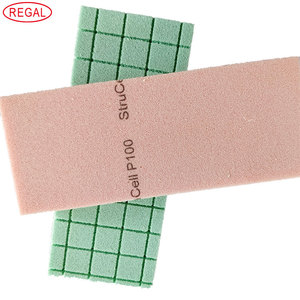
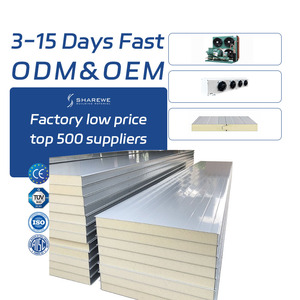
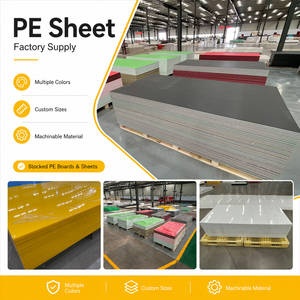
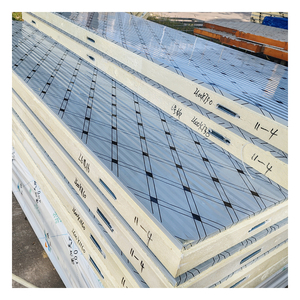
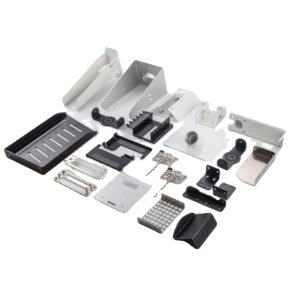
Selecting the appropriate sandwich panel core geometry and material chemistry is paramount to balancing fire endurance, thermal conductivity, structural loading, and environmental moisture resistance.
| Core Material Type | Thermal Conductivity (λ) | EN 13501-1 Fire Class | Moisture Absorption | Optimal Application Field |
|---|---|---|---|---|
| Polyisocyanurate (PIR) | 0.020 - 0.023 W/m·K | B-s1, d0 (Flame Retardant) | < 1.0% Volume | Cold Storage, Logistics Centers, Food Processing |
| Rock Wool (Mineral Wool) | 0.038 - 0.044 W/m·K | Class A1 (Non-Combustible) | Slight (Hydrophobic treated) | Pharmaceutical Cleanrooms, High-Risk Fire Walls |
| Expanded Polystyrene (EPS) | 0.033 - 0.038 W/m·K | Class B2 / E | 2.0% - 4.0% Volume | Prefab Housing Wall SIPs, Commercial Enclosures |
| PVC Foam Core (60D-200D) | 0.031 - 0.035 W/m·K | Self-Extinguishing | < 0.1% (Impermeable) | Marine Decking, Lightweight Industrial Shells |
Modern commercial and industrial architecture is undergoing a structural transition toward prefabrication, thermal efficiency, and stringent fire safety standards. Central to this evolution are CE-certified sandwich panel systems—composite structural elements consisting of two rigid facings bonded to a lightweight, highly insulating core material. As global energy building codes (such as the EU Energy Performance of Buildings Directive and international ASHRAE standards) tighten performance thresholds, procurement teams and structural engineers must look beyond baseline unit pricing to evaluate life-cycle thermal resistance, structural load capacities, structural sound damping, and embodied carbon footprints.
For international buyers sourcing insulated metal panels, CE marking under EN 14509 (Factory-made double skin metal faced insulating sandwich panels) is not merely a legal import prerequisite for the European Economic Area—it is the definitive global seal of technical auditing and manufacturing consistency. Compliance requires comprehensive third-party testing across key structural parameters:
Choosing the correct core insulation matrix represents the single most critical engineering decision during project specification:
Polyisocyanurate (PIR) & Polyurethane (PUR): Formed via the exothermic reaction of polyols and isocyanates, PIR incorporates an elevated isocyanate ratio that forms rigid ring structures. This molecular configuration yields unmatched thermal resistance (λ as low as 0.020 W/m·K), making 100mm PIR panels thermally equivalent to nearly 180mm of traditional EPS. B1-grade PIR panels are the industry standard for temperature-controlled cold rooms, logistics hubs, and deep-freeze facilities (-40°C to +10°C).
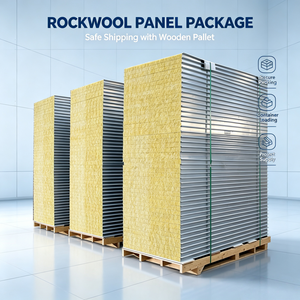
Structural Mineral Rock Wool: Derived from molten basalt rock spun into dense fibrous matrices (typically 100kg/m³ to 140kg/m³), rock wool panels offer absolute non-combustibility (Class A1). While possessing a slightly higher U-value than rigid foams, rock wool panels provide up to 4 hours of fire resistance (EI120 to EI240 rating), making them non-negotiable for hospital cleanrooms, battery manufacturing plants, chemical storage, and high-density partition walls.
Expanded Polystyrene (EPS) Structural Insulated Panels (SIPs): Engineered for high strength-to-weight ratios, EPS SIP panels offer an economical structural envelope solution for rapid-assembly residential modular housing, site offices, and perimeter fencing. Grooved interlock configurations eliminate thermal bridging during field assembly.
The longevity of an insulated panel wall system depends fundamentally on its protective metallic skin. Standard configurations feature hot-dip galvanized steel (S280GD to S350GD grades) enhanced with multi-layer organic coatings:
Discover how shifting international environmental regulations, smart automated fabrication, and off-site prefabrication dynamics are shaping global purchasing strategies.
Procurement teams are prioritizing manufacturers providing verified Environmental Product Declarations (EPDs). Future sandwich panel procurement hinges on bio-based polyol cores, recycled steel skins, and zero-ODP/low-GWP blowing agents (such as Hydrofluoroolefins - HFOs) to meet stringent LEED and BREEAM green building certifications.
The global shift toward Modern Methods of Construction (MMC) demands panel systems engineered for direct integration into volumetric modular frames. Pre-routed conduit channels, integrated window/door framing trim, and factory-fitted cam-locks reduce field installation labor costs by up to 60%.
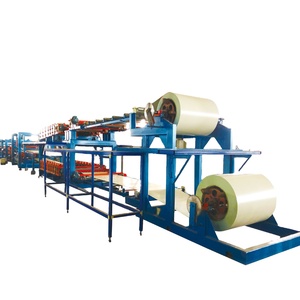
Standardized paneling is rapidly giving way to custom-engineered building envelopes. Advanced manufacturers utilize continuous automated double-belt lines paired with high-precision fiber laser cutting and CNC bending units to output custom flashings, complex corner modules, and tailored structural steel closures.
Detailed technical answers to common queries raised by general contractors, structural designers, and international procurement managers.
CE-certified cold room sandwich panels utilize high-precision tongue-and-groove joint profiles equipped with factory-applied labyrinth sealants or double soft PVC gaskets. In sub-zero cold room environments, these interlocking joints prevent warm air infiltration and moisture condensation, ensuring zero thermal bridge effect across the panel envelope.
B1 level PIR panels are flame-retardant organic polymer foams that self-extinguish when the direct flame source is removed, producing a protective carbonized layer. Class A1 Rock Wool panels are made of inorganic mineral fibers that are completely non-combustible and do not contribute to heat or flame spread, resisting temperatures exceeding 1,000°C for up to 4 hours.
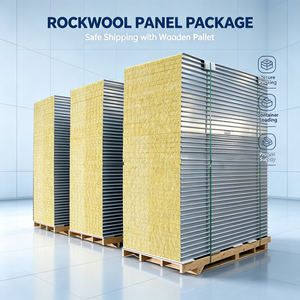
Container loading capacity depends on panel thickness. For standard 50mm wall panels, approximately 1,100 to 1,200 sq.m can be packed into a 40ft HC container. For thicker 100mm panels, capacity is approximately 550 to 600 sq.m. We supply detailed computerized container stacking diagrams with every export shipment to maximize volume efficiency and eliminate transport damage.
Yes. Cleanroom panels feature completely flat, flush surfaces with anti-static, anti-microbial coatings (such as PE or PVDF over galvanized steel or 304 stainless steel). They are resistant to repeated chemical disinfection and can be specified with embedded aluminum coving accessories and aluminum cleanroom window frames.
Sandwich panels are non-load-bearing or semi-load-bearing envelope elements that attach directly to structural steel framing (purlins and girts), concrete columns, or timber sub-structures. Foundation concrete pads must be level within a 2mm tolerance to ensure seamless tongue-and-groove joint seating along wall baselines.
Operating as a primary direct manufacturer rather than a trading reseller since 1998, our 500,000 sq ft production hub integrates automated continuous double-belt laminating lines, high-precision fiber laser cutting sheet metal fabrication, and computerized polyurethane foam injection units. We maintain rigorous quality control protocols across raw material steel coils, chemical formulation purity, and dimensional tolerances.
Our engineering support team provides structural calculations, wind-load analysis, custom shop drawings, container packaging layout optimization, and spare component supply kits for projects spanning across Europe, the Americas, the Middle East, and Asia-Pacific.