Direct factory recommendations for emergency response, residential ADUs, commercial offices, and multi-family modular developments.
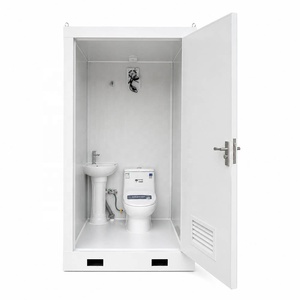
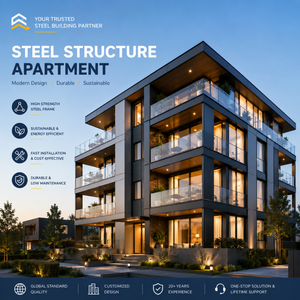
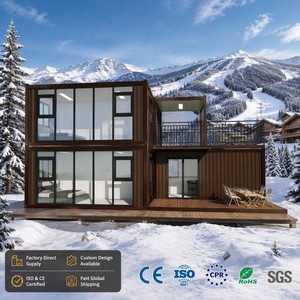
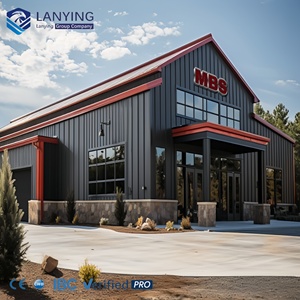
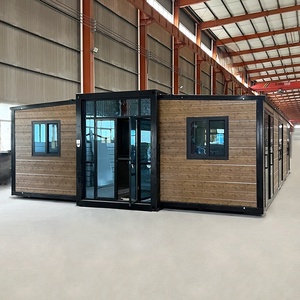
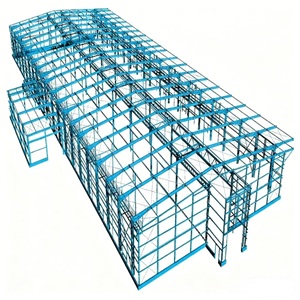
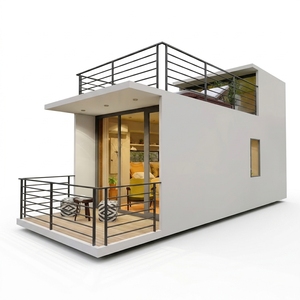
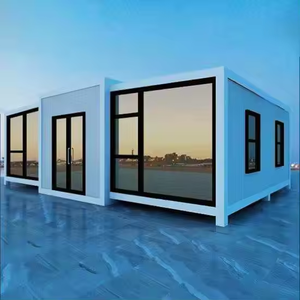
The global demand for rapid-deployment housing, transitional emergency shelters, commercial site offices, and accessory dwelling units (ADUs) has triggered a paradigm shift in off-site construction engineering. As a premier **China Portable Shelter Exporter**, our manufacturing group operates a state-of-the-art 500,000 sq ft production ecosystem founded in 1998. Over nearly three decades of industrial refinement, China’s prefabricated shelter export sector has evolved from rudimentary site sheds to sophisticated, structurally certified, pre-engineered building systems.
Industrial B2B buyers—ranging from government housing authorities and international humanitarian relief NGOs to commercial construction contractors and turn-key developers—face severe challenges in freight logistics, structural compliance, wind/snow load resilience, and thermal performance. To resolve these friction points, our engineering hub combines automated cold-formed steel roll-forming, robot-assisted structural welding, and advanced thermal envelope integration under ISO 9001, ISO 14001, and EN 1090-1 certified standards.
Operated since 1998, our single-site manufacturing facility produces over 1,500 modular units monthly, ensuring unyielding lead-time guarantees and massive scale economies for global tenders.
Engineered to withstand seismic activity up to Magnitude 8.0 and sustained wind loads reaching 120 km/h. Structural frames utilize Q235B/Q345B hot-dip galvanized steel profiles.
From custom CAD/BIM architectural schematics to container loading optimization and remote technical supervision during site unfold, we deliver end-to-end B2B trade fulfillment.
Understanding the engineering leaps from static flat-pack cabins to automated expandable wing modules.
Historically, B2B procurement of portable shelters revolved around standard 20ft ISO sea containers converted manually into offices or accommodations. While structurally robust, these traditional conversions suffered from severe spatial constraints (internal width limited to ~2.2 meters) and prohibitive shipping costs, as buyers essentially paid to transport empty air space across ocean lanes.
Modern **China Portable Shelter Exporters** have revolutionized off-site engineering through the introduction of dual-wing expandable container designs and fold-flat hinged chassis systems. By utilizing heavy-duty galvanized steel hinges, counter-weighted mechanical leverage points, and precision rubber-gasket seals, modern expandable units unfold on-site within hours to expand from a 2.25-meter transport width into a spacious 6.3-meter-wide structural living footprint. This 300% expansion ratio allows for pre-installed kitchens, fully fitted wet-room bathrooms, multi-bedroom layouts, and pre-wired electrical networks to be deployed with minimal site labor.
Early portable shelters suffered from extreme thermal bridge loss, internal condensation, and poor HVAC efficiency. The latest generation of Chinese manufactured shelters incorporates thermal break technology within structural steel posts and utilizes advanced sandwich panel insulation cores:
Because portable shelters are often stationed in demanding coastal, tropical, or desert environments, corrosion resistance dictates product lifespan. Leading exporters utilize cold-formed C and Z steel profiles subjected to continuous hot-dip galvanization with zinc coatings ranging from 120g/m² to 275g/m². Outer wall skins utilize fluorocarbon (PVDF) or high-durability polyester (HDP) pre-painted galvanized steel (PPGI) sheets, guaranteeing a zero-maintenance structural skin designed for 25+ years of operational service.
A rigorous engineering comparison to assist procurement officers, project managers, and importers in matching structural systems to project logistics.
| Structural System | Shipping Density (per 40ft HC) | On-Site Assembly Time | Required Site Crew | Pre-Installed Fit-Out Level | Primary Project Application |
|---|---|---|---|---|---|
| Expandable Container House | 2 to 4 Complete Units | 2 to 4 Hours / Unit | 2 – 3 Workers | 90% (Bathroom, Kitchen, Wiring) | Residential ADUs, Emergency Housing, Glamping |
| Foldable Container Unit | 4 to 6 Complete Units | 10 to 15 Minutes / Unit | 2 Workers + Crane | 70% (Flooring, Electric, Wall Panel) | Construction Site Offices, Security Posts |
| Flat Pack Container House | 6 to 8 Unassembled Units | 4 to 6 Hours / Unit | 3 – 4 Workers | 40% (Knock-Down Component Kit) | Large-Scale Worker Camps, School Dormitories |
| Light Steel Villa Frame | 100–150 m² Floor Area Kit | 2 to 4 Weeks | 4 – 6 Skilled Workers | 10% (Raw Structural & Cladding Material) | Permanent Luxury Residential, Multi-Story Resorts |
To ensure flawless execution on overseas contracts, our engineering export team follows a strict 4-stage quality gate protocol:
Verification of local building codes, wind/snow loads, foundation interface points, and electrical voltage/frequency specifications.
Automated steel roll-forming, laser cutting, shot blasting, powder coating, and sandwich panel pressure lamination under strict QA controls.
Trial assembly, water spray impermeability testing, electrical load safety testing, and dynamic folding mechanism inspection prior to packing.
Custom steel frame palletizing, corner block protection, anti-vibration strapping, and ocean transport container space optimization.
Market intelligence and architectural insights for long-term supply chain planning.
Institutional B2B buyers and government infrastructure agencies are increasingly rejecting single-use temporary site sheds in favor of reusable modular assets. Future procurement contracts explicitly demand shelters that can be assembled, operated for 24–36 months, folded down, and relocated to new project sites with zero structural degradation. Modern expandable container chassis are engineered for up to 50 fold-unfold cycles, protecting municipal capital investment across decades.
As remote resource extraction sites and disaster-stricken zones lack immediate grid connectivity, portable shelter exporters are integrating flexible thin-film photovoltaic (PV) solar panels directly into roof profiles. Combined with pre-wired lithium iron phosphate (LiFePO4) battery storage banks, invertor systems, and greywater recycling units, next-generation portable shelters operate as self-sustaining off-grid micro-modules.
In metropolitan markets across North America, Europe, and Australia, local zoning laws are rapidly evolving to permit Accessory Dwelling Units (ADUs) as a solution to housing shortages. Top China exporters are responding by delivering factory-built ADUs pre-compliant with international plumbing, electrical (CE, UL, SAA), and structural codes. This allows property owners and developers to bypass costly local contractor fees and deploy fully functional rental housing units in under 48 hours.
Detailed engineering answers to clear B2B import bottlenecks.
Because our specialized foldable and expandable shelters fold flat to a fraction of their expanded footprint, you can fit between 2 to 4 complete Expandable Deluxe units or up to 6 Foldable Site Office units in one 40ft HC container. This density reduces global shipping overhead by up to 80% compared to fully built volumetric cabins.
Due to the rigid perimeter steel chassis engineered into our units, expensive continuous concrete slabs are usually unnecessary. Projects typically utilize simple concrete strip footings, level pad footings at structural corner posts, or adjustable helical steel screw piles. This minimizes ground disturbance, accelerates civil works, and lowers total project installation costs.
Our engineered portable shelters utilize high-tensile Q235B/Q345B steel framing designed to resist sustained wind speeds of up to 120 km/h (upgradable for hurricane zones) and roof snow loads up to 1.5 kN/m². Wall cassettes feature thermal break core insulation (PU/Rockwool) up to 100mm in thickness, enabling operational comfort in temperatures ranging from -30°C to +50°C.
Yes. As a direct factory manufacturer, we tailor electrical wiring, circuit breakers, outlets, and switches to meet national codes including US UL/NEC, European CE/IEC, and Australian/New Zealand SAA standards. Plumbing schematics and fixture specs are similarly customized for regional PEX, PVC, or copper pipe compliance.
Every export shipment includes comprehensive 3D installation manuals, step-by-step video guidance, and structural engineering calculation sheets. Furthermore, we maintain a complete inventory of component-level spare parts (such as specialized EPDM sealing gaskets, heavy-duty hinges, replacement panel sections, and lock sets) ensuring rapid dispatch without needing full module replacement.
Need engineered drawings, factory-direct pricing, or container loading estimates for your upcoming project? Speak directly with our senior off-site construction engineering team today.
Contact Us