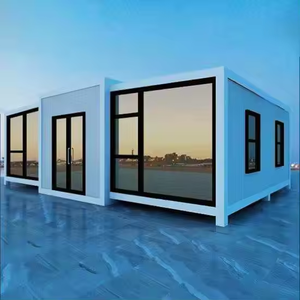
Market Analysis: The Rising Demand for Accessory Dwelling Units (ADUs) in Kenya
The Kenyan real estate landscape is undergoing a structural transition. Driven by rapid urbanization in metro hubs like Nairobi, Kisumu, Nakuru, and Mombasa, property developers and private landowners are turning away from slow, capital-intensive stone construction (traditionally known as Mawe construction) toward modern Accessory Dwelling Units (ADUs) and prefabricated modular housing.
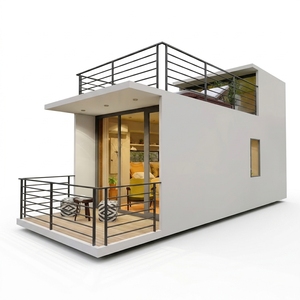
Under Kenya’s National Affordable Housing Agenda and shifting municipal zoning regulations in counties such as Nairobi City County and Kiambu County, secondary residential units—commonly referred to as backyard ADUs, granny flats, or rental annexes—have emerged as the most lucrative avenue for urban density and passive rental income. Importing precision-engineered ADUs from China's top modular manufacturers offers a financial and operational advantage that local traditional methods cannot match.
Optimized Shipping Density
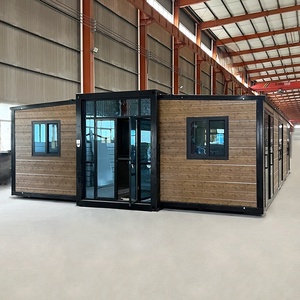
Our proprietary folding ADU design collapses to 1/4th of its expanded volume, allowing up to 4 complete dwelling modules to fit into a single 40ft High Cube container bound for Mombasa Port.
1-Day Rapid Site Assembly
Pre-fitted with factory-integrated electrical conduits, plumbing channels, windows, and structural hinges. A standard 20ft or 40ft expandable ADU unfolds into a habitable home in under 8 hours.
East Africa Climate Durability
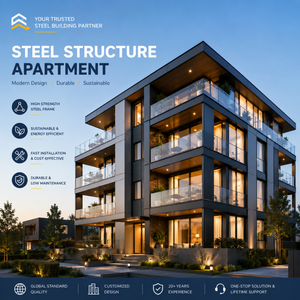
Built with galvanized Q235B/Q345 steel frames and high-density EPS/Polyurethane sandwich panel walls that resist UV radiation, extreme Rift Valley humidity shifts, termites, and C3-level coastal corrosion.
Technical Specifications: Chinese Modular Engineering vs. Local Construction
To understand why leading Kenyan real estate syndicates, hospitality resorts in Maasai Mara, and private property owners in Karen, Muthaiga, and Runda are procuring China-made ADUs, a technical baseline comparison is essential. Below is an engineering evaluation between traditional Kenyan masonry, converted shipping containers, and PackPrefab's purpose-built expandable ADUs.
| Evaluation Parameter | PackPrefab Chinese ADU | Local Kenyan Masonry (Stone) | Converted Shipping Container |
|---|---|---|---|
| Turnkey Build Time | 1 to 3 Days (Factory pre-built) | 6 to 9 Months (Weather dependent) | 2 to 4 Weeks (Manual modification) |
| Sea Freight Logistics | 4 Units per 40ft HC (Collapsible) | N/A (Raw materials sourced locally) | 1 Unit per shipment (High freight/m³) |
| Thermal Insulation | Superior (50-75mm PU/EPS Sandwich) | Poor (High thermal mass absorbs heat) | Extremely Poor (Steel box effect) |
| Earthquake & Seismic Rating | Grade 8 Structural Steel Frame | Vulnerable to cracking (Rift Valley Zone) | Grade 7 Rigid Shell |
| Foundational Requirement | Simple Concrete Plinths / Steel Piles | Deep Strip Footing / Massive Concrete Slab | Concrete Blocks / Corner Pads |
| Re-locatable / Portable | 100% Foldable & Relocatable | 0% (Permanent fixture) | 50% (Requires crane & flatbed) |
Localized Use-Cases: Where ADUs excel across Kenyan Counties
The versatility of China-manufactured Accessory Dwelling Units fits seamlessly into Kenya's micro-economic landscape. By offering scalable space configurations, our export models serve multiple high-yielding sectors:
1. Suburban Backyard Rental Annexes (Nairobi Metropolitan Area)
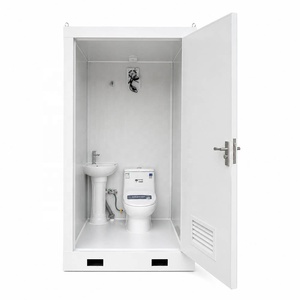
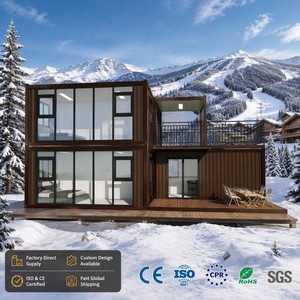
In high-density residential zones such as Kitisuru, Lavington, Syokimau, Ruiru, and Ngong, property owners utilize expandable 20ft and 40ft container homes as self-contained ADUs. Featuring fully fitted modern kitchenettes and wet rooms, these units deliver immediate rental yields from young professionals, remote workers, and Airbnb guests without requiring disruptive brick-and-mortar construction site operations.
2. Eco-Tourism Lodges & Safari Camps (Rift Valley & Coastal Belt)
Kenya's premier hospitality spots—including Naivasha, Nanyuki, Watamu, and the Maasai Mara—require eco-sensitive structures with minimal ground disturbance. Our light-steel modular luxury ADU villas can be erected off-grid, equipped with solar panel roof mounts and rainwater catchment connections, blending high luxury with environmental sustainability.
3. Agricultural Homestead Extensions & Off-Grid Living
For rural investments in Kiambu, Machakos, Eldoret, and Nakuru, families use modular ADU kits to establish secondary homes for multi-generational living. The quick-install nature ensures that farm owners can set up fully insulated residential shelters without worrying about local skilled labor shortages.
Manufacturing Mastery: Why PackPrefab is China’s Premier ADU Partner
Operating out of a 500,000 sq. ft advanced production hub since 1998, PackPrefab is an original structural factory—not a middleman trading agency. We control every millimeter of steel tolerance, automated robotic welding line, and sandwich panel lamination phase. For our Kenyan clientele, this guarantees that structural members are ISO-certified, corrosion-treated, and backed by complete technical assembly documentation and remote engineering assistance.
Step-by-Step Logistics: Direct Export from China Factory to Mombasa Port
Procuring an ADU directly from our Chinese factory to your site in Kenya is structured to eliminate friction and hidden costs:
- Design & Specification Alignment: Choose from 20ft, 30ft, or 40ft expandable layouts or flat-pack options tailored to your local site layout.
- Quality Inspection & Pre-Assembly: Every unit is pre-assembled in our factory, pressure-tested for weatherproofing, and inspected before structural folding.
- Mombasa Port Clearing & KEBS PVOC Compliance: We supply all structural test certifications, dimensional drawings, and export documents needed for Kenya Bureau of Standards (KEBS) Pre-Export Verification of Conformity (PVoC) to facilitate customs clearance at Kilindini Harbour.
- Inland Transport & Unfolding: Once cleared, units travel via SGR or standard flatbed truck directly to your site in Nairobi, Kisumu, or upcountry, where a crew of 3 can deploy the unit in hours.
Frequently Asked Questions by Kenyan Buyers & Importers
Do I need building approvals from local Kenyan County Governments for an ADU? +
Yes. While prefabricated ADUs fall under semi-permanent or relocatable structures in many jurisdictions, county planning boards (such as Nairobi City County Council) require site plan drawings and structural calculations. PackPrefab provides complete architectural schematics, floor plans, and load data to present to your registered local architect or engineer for county approval.
How do PackPrefab ADUs handle Kenya's hot coastal humidity and high highland rainfall? +
Our ADUs are engineered specifically for tropical and equatorial climates. Wall panels utilize high-density polyurethane (PU) or fire-retardant EPS cores that reflect ambient thermal radiation, maintaining cool interior temperatures in coastal zones like Mombasa and Malindi. The galvanised steel frame receives anti-corrosion marine coating to prevent rust, while double-sealed silicone gaskets prevent leakage during heavy highland downpours.
How many units fit into a single shipping container to minimize freight cost? +
Because of our proprietary folding mechanics, 4 folded 20ft Expandable ADU units collapse neatly into one 40ft High Cube (HC) sea container. This cuts sea freight costs per unit by up to 80% compared to importing standard rigid containers or pre-built cabins.
Can the ADU be configured completely off-grid with solar and septic systems? +
Absolutely. Our roof framing is designed to support solar panel array installations without compromising structural integrity. Pre-fitted internal plumbing lines connect effortlessly to external biodigesters, rainwater collection tanks, or conventional septic systems commonly used in Kenyan rural and peri-urban developments.
What foundation preparation is needed before the unit arrives on site? +
Unlike traditional stone buildings requiring expensive deep excavations, our lightweight structural steel ADUs only require leveled concrete piers, strip footings, or ground screw anchors under the main chassis support points. This significantly reduces ground preparation costs and site setup time.