
Factory-direct prefabricated living units engineered for rapid assembly, high thermal resistance, and structural longevity across all 7,641 islands of the Philippine archipelago.
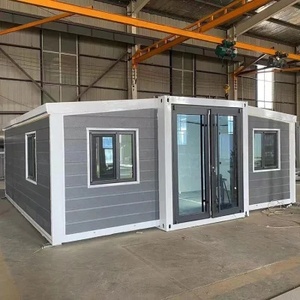
Triples living area upon deployment. Integrated galvanised steel chassis with pre-fitted plumbing, ideal for Philippine urban backyards and provincial multi-generational living.
Contact Us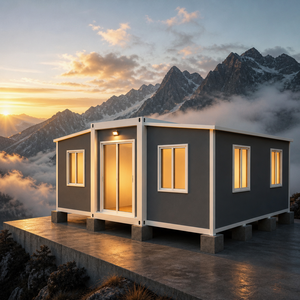
Designed for off-grid coastal resorts and island living. Features pre-wired solar conduit channels, thermal PU wall insulation, and marine-grade protective exterior coating.
Contact Us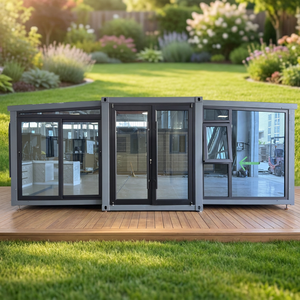
Includes factory-installed kitchen modules, master bathroom fixture suites, and extended shaded porch modules optimized for tropical rain and sunlight protection.
Contact Us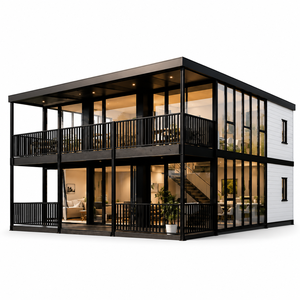
Heavy-duty Q235B/Q355B steel superstructure built for high-density leasing, staff quarters, or Airbnb developments in prime Philippine tourist hubs like Siargao and Boracay.
Contact Us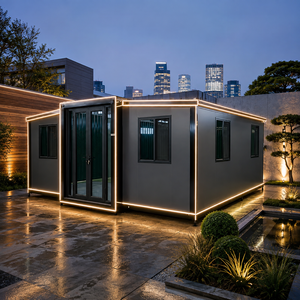
Modern aesthetic featuring floor-to-ceiling double-glazed tempered safety glass doors. Perfect for executive backyard offices, studio suites, or luxury guest villas in Metro Manila.
Contact Us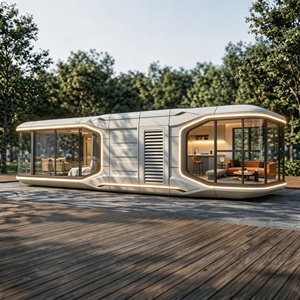
Turnkey sleek pod architecture pre-fitted with high-efficiency inverter air conditioning units and internal kitchenettes, engineered for high-yield glamping operations.
Contact Us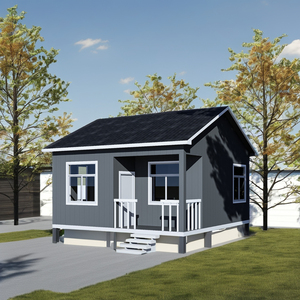
Optimized spatial layout dividing public living and private rest chambers. Engineered to maximize land utility on tight lot parcels across Philippine suburban developments.
Contact Us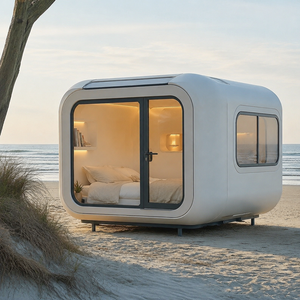
Rounded metallic shell featuring thermal-break insulation, integrated lighting circuitry, and heavy-duty moisture barrier lining designed for humid tropical microclimates.
Contact UsAnalyzing structural integrity, archipelagic freight optimization, and local regulatory compliance for modular housing deployment.
Navigating the global modular construction supply chain requires distinguishing between localized resellers and genuine original equipment manufacturers (OEM). Established in 1998, our 500,000 sq ft manufacturing facility operates automated steel roll-forming machinery, robotic laser-welding lines, and controlled sandwich panel lamination stations. By manufacturing all structural chassis, insulated cassettes, and joinery components in-house, we eliminate broker markups while exercising absolute control over dimensional tolerances and metallurgical quality standards required by international building codes.
Transporting heavy volumetric cargo across the Philippine island chain presents severe freight cost barriers. Standard rigid modular homes occupy entire container spaces, resulting in exorbitant sea-freight overheads per usable square meter. Our proprietary double-wing expandable and foldable chassis system solves this challenge: folded modules collapse to roughly one-quarter of their extended height. Up to four folded ADU units nest tightly inside a single 40ft High-Cube (40HQ) container, slashing international shipping expenses by up to 80% and drastically reducing logistics complexity at key entry ports like Manila (MICP), Batangas, and Cebu.
How our modular structures withstand Category 5 super typhoons, high seismic activity, and tropical maritime corrosion.
The Philippines experiences an average of 20 tropical cyclones annually. Our units feature reinforced Q355B structural steel perimeter framing, heavy-duty hinge mechanisms, and double-locking corner assemblies. Rated to withstand wind gusts up to 250 km/h (Category 5 Super Typhoon equivalent), these structures provide unyielding safety during extreme atmospheric events.
Tropical heat drives elevated air conditioning costs. Standard single-skin metal containers suffer from intense solar heat gain. We integrate high-density polyurethane (PU) or rockwool core sandwich panels with thermal-break double-pane low-E glass glazing, keeping indoor ambient temperatures up to 8°C cooler and reducing HVAC power usage by 35-40%.
Salt-laden maritime air accelerates oxidation on standard metal buildings located in coastal provinces like Palawan, La Union, and Davao. All PackPrefab steel chassis members undergo hot-dip galvanization (min 120g/m² zinc coating) topped with industrial epoxy primers and polyurethane topcoats engineered for C4/C5 marine atmospheric exposure.
How landowners, commercial developers, and public agencies utilize modular ADUs for rapid revenue generation and flexible space creation.
In congested urban zones across Metro Manila (Quezon City, Pasig, Parañaque, Alabang), land scarcity makes traditional masonry additions prohibitively expensive and disruptive. Property owners utilize 20ft and 40ft expandable ADUs to install autonomous "Granny Flats" for aging parents, rental suites for young professionals, or quiet work-from-home executive offices. Because the units require no extensive deep foundation footings and arrive fully wired, installation is completed in a single afternoon without damaging existing gardens or adjacent walls.
Philippine eco-tourism developers face severe logistical constraints when transporting raw cement, sand, and heavy equipment to remote island sites. Our flat-pack and expandable ADUs (such as the Apple Cabin and Capsule Pod series) ship tightly packaged into standard freight containers, making off-loading onto inter-island barges straightforward. Resorts can deploy 10 to 20 luxury guest keys in weeks rather than months, securing immediate rental yield while maintaining minimal ecological site footprint.
Millions of OFWs seek secure, inflation-hedged real estate investments in their home provinces (Bulacan, Cavite, Laguna, Cebu). Constructing conventional hollow-block structures remotely often suffers from contractor delays, material theft, and budget overruns. By sourcing factory-finished OEM expandable homes, OFW investors receive guaranteed turnkey quality, predictable pricing, and fast-track completion for rental income generation or modern family vacation homesteads.
Situated on the Pacific Ring of Fire, Philippine local government units (LGUs) require immediate deployable medical clinics, emergency command posts, and temporary housing shelters post-typhoon or seismic activity. Pre-positioned folded ADU units can be trucked into devastated zones and unfolded by a small 4-person crew in under two hours, establishing instant sanitary housing equipped with electrical distribution panels and private bathrooms.
Evaluating operational metrics to guide procurement teams, architects, and structural engineers.
| Specification Metric | Expandable ADU Deluxe Series | Foldable Container Office | Flat-Pack Modular Cabin | Traditional CHB Masonry |
|---|---|---|---|---|
| On-Site Assembly Time | 4 - 8 Hours | 1 - 2 Hours | 1 - 2 Days | 3 - 6 Months |
| Shipping Volume Density | 1 Unit per 20ft / 2 per 40HQ | 4 Units per 40HQ | 6 - 8 Units per 40HQ | N/A (Bulk Materials) |
| Wind Load Resistance | 250 km/h (Category 5) | 220 km/h | 200 km/h | Variable (Quality Dependent) |
| Thermal Insulation Core | 50mm/75mm PU / Rockwool | 50mm EPS / PU Panel | 50mm EPS Panel | Uninsulated Hollow Block |
| Pre-Installed Interior Finish | 90% Complete (Kitchen/Bath) | 80% Complete (Flooring/Wiring) | 50% Shell Only | 0% (Site Labour Required) |
| Relocation Capability | High (Can be folded & moved) | Maximum (Reusable Hinge) | Moderate (Requires Unbolting) | Zero (Permanent Fixture) |
Addressing import permits, Bureau of Customs (BOC) processes, site preparation, and building code compliance.
Partner directly with an established 27-year prefab manufacturer. Submit your site dimensions, project location, and unit count to receive detailed CIF port pricing and technical specifications.