
Optimized for rapid sea freight through Port Klang, low site footprint, high heat rejection, and extreme rain durability across the Klang Valley.
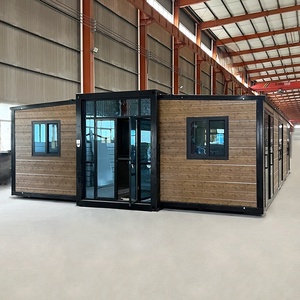
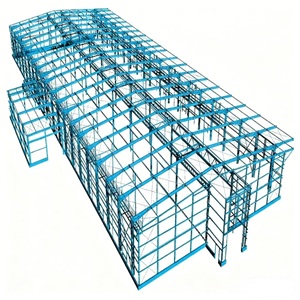
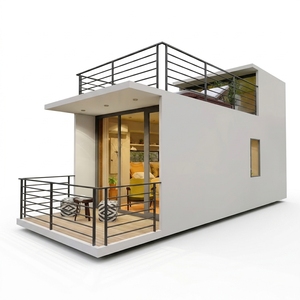
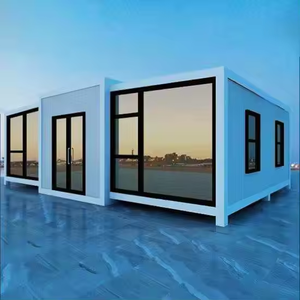
As an actual original equipment manufacturer (OEM) operating a 500,000 square foot heavy fabrication facility since 1998, our organization bridges the gap between high-precision Chinese modular engineering and the rigorous infrastructure demands of West Malaysia. Many regional suppliers operate as third-party brokerages, leading to structural inconsistencies, poor seal longevity, and unexpected thermal bridging. In contrast, every structural frame leaving our production lines undergoes full stress testing and dimensional validation to ensure squareness before packaging.
The core advantage of our proprietary folding logic rests in structural geometry and logistics efficiency. Standard shipping containers transport massive volumes of empty air when moving pre-built modular cabins. Our engineered foldable system collapses down to approximately 25% of its expanded volume. This geometric conversion allows four complete folded container modules to be securely consolidated inside a single 40ft High-Cube (40HQ) ocean freight container. For procurement teams serving Kuala Lumpur via Port Klang, this translates to an immediate reduction of up to 80% in ocean freight volume and landing logistics expenditure.
Logistics Intelligence for Klang Valley Projects: Shipping dense folded structures drastically mitigates demurrage costs at Port Klang and reduces truck transport traffic across the Federal Highway, MRR2, and KESAS transport arteries.
Kuala Lumpur's microclimate presents severe environmental challenges to standardized prefabricated architecture. Experiencing high ambient temperatures averaging 32°C year-round alongside relative humidity levels consistently exceeding 80%, coupled with intense convective rainstorms during the Inter-Monsoon periods, standard single-skin container conversions fail rapidly. Uninsulated metal walls convert interiors into heat traps, while sub-standard seam gaskets disintegrate under solar ultraviolet radiation, causing devastating moisture ingress.
Our insulated foldable container homes serving Kuala Lumpur implement advanced Tropical Thermal Barrier (TTB) Architecture. We utilize high-density hydrophobic rockwool or fire-resistant Polyisocyanurate (PIR) core sandwich paneling ranging from 50mm to 100mm in thickness. These panels achieve thermal conductivity ($\lambda$) values as low as 0.022 W/m·K, effectively arresting heat transfer through radiation and conduction. Roof assemblies incorporate elevated rain drainage channels designed for peak rainfall intensities ($>100\text{ mm/hr}$), preventing water ponding and structural rust.
Multi-layer PIR/Rockwool insulation lowers air conditioning energy consumption by up to 42% in tropical high-humidity zones like Selangor.
Heavy-gauge Q235B steel chassis treated with hot-dip galvanization ($>120\text{g/m}^2$) prevents oxidation caused by KL’s high humidity and urban pollutants.
Hinged structural joints utilize automotive-grade double-lip EPDM weatherstripping to completely block wind-driven monsoon rains and tropical insects.
The versatility of our folding modular system enables developers, civil engineering contractors, and private landowners across Kuala Lumpur and Selangor to deploy high-performance infrastructure without lengthy site preparation cycles. Key regional applications include:
Prime contractors operating on major transit line extensions require rapid office deployment. Our foldable container offices unfold within 2 hours on simple concrete pads, providing immediate workspace for project managers and engineering staff.
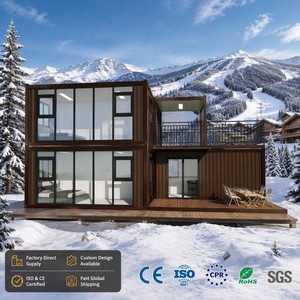
Hospitality developers building eco-tourism retreats in high-altitude or coastal areas leverage our Expandable Deluxe and DYCE Light Steel Villa systems. These units preserve the natural landscape while providing luxury guest accommodations with full wet-room fixtures pre-installed.
Homeowners seeking accessory dwelling units (ADUs) in urban plots utilize our Flip Series expandable houses. Their compact closed footprint fits through narrow residential streets before expanding threefold on site to create modern multi-bedroom living suites.
Understanding the operational trade-offs is critical for procurement directors evaluating Industrialised Building System (IBS) adoption under Malaysian Construction Industry Development Board (CIDB) frameworks.
| Evaluation Metric | PackPrefab Foldable Units | Traditional Wet Concrete | Converted Used Freight Containers |
|---|---|---|---|
| On-Site Assembly Time | 1 to 4 Hours per module | 6 to 12 Months | 2 to 4 Weeks (heavy modification) |
| Thermal Comfort (R-Value) | High ($R-18\text{ to }R-24$ rating) | Moderate (requires insulation add-on) | Extremely Poor (Severe solar thermal load) |
| Port Klang Shipping Density | 4 Folded Units per 40HQ | N/A (Raw material haulage) | 1 Unit per truck load |
| CIDB IBS Compliance | High IBS Score (Factory Prefab) | Variable / Low IBS Efficiency | Non-Standardized Structural Data |
| Relocation Capability | 100% Foldable & Reusable | Permanent (Demolition required) | Difficult (Requires heavy craneage) |
Our foldable container modules are fabricated and classified under standard ISO shipping dimension standards (HS Code 9406.90 - Prefabricated Buildings). We provide complete shipping manifests, Certificate of Origin (Form E for China-ASEAN duty exemption), and structural engineering drawings to facilitate streamlined clearance through Northport or Westport at Port Klang.
Because our structural steel frame carries the structural loads internally, a full concrete slab is rarely required. Most clients in Kuala Lumpur utilize simple concrete strip footings, pad footings, or adjustable steel screw piles placed under the main frame corner blocks. This minimizes site disturbance and cuts civil prep costs significantly.
Yes. All roof assemblies feature integrated perimeter rain gutters connected to internal downspouts engineered for extreme rainfall rates ($>100\text{ mm/hour}$). Structural joints incorporate secondary EPDM rubber compression seals, preventing water penetration even during high-wind thunderstorm conditions.
Thanks to our high-density PIR/Rockwool insulation core ($50\text{mm}$ standard, upgradeable to $75\text{mm}$ or $100\text{mm}$), thermal loss is minimal. A single 1.0 to 1.5 HP inverter split-unit air conditioner is typically sufficient to maintain a comfortable indoor temperature of 22°C inside a standard 20ft expanded module in Kuala Lumpur.
Absolutely. Electrical wiring can be pre-configured to Malaysian MS IEC 60364 compliance standards with 240V/50Hz circuitry, UK-style 3-pin BS 1363 sockets, and integrated distribution boards (DB). Plumbing lines are factory-tested for pressure containment prior to folding and shipment.
With proper foundation elevation to prevent standing ground water contact, our hot-dip galvanized steel frames combined with fluorocarbon (PVDF) coated exterior sandwich panels deliver a service lifespan of 20 to 30+ years with minimal structural maintenance.
Partner directly with an established 500,000 sq ft modular manufacturer. Receive structural spec sheets, Port Klang landing cost estimates, and customized floor plan proposals within 24 hours.