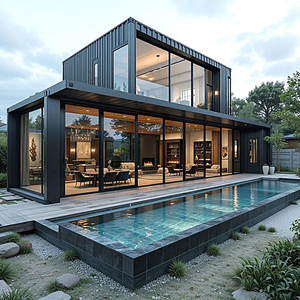
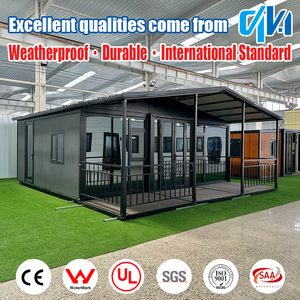
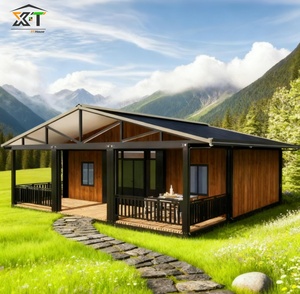
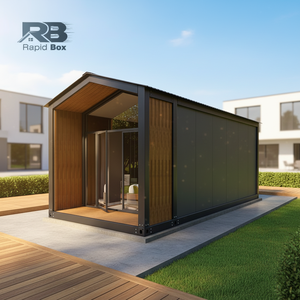
Pack and go — why not with your home as well?
PackPrefab Homes logo
Korea Industrial & Commercial Modular Infrastructure

Kiosk Container Manufacturers & Suppliers in Korea

High-precision expandable & foldable modular kiosk structures engineered for unmanned retail, micro-fulfillment, and smart urban services across South Korea.

Enterprise Modular Inventory

Featured Kiosk Container Solutions

Factory-engineered, climate-insulated container kiosks optimized for rapid deployment in high-density Korean urban locations.

Unmanned Retail & Dining Modular Kiosk Container Commercial Grade

Modular Unmanned Retail & Dining Kiosk Container

Custom Layout PIR Insulation Integrated Counter

Designed for self-service micro-restaurants and automated convenience stores in Korean urban hubs.

Send an Inquiry
Light Steel Mobile Coffee & Information Pod Compact Mobile

Custom Light Steel Mobile Pop-Up Kiosk Pod

16ft Compact Fast Setup Heavy Duty Steel

Precision-fabricated light steel pod tailored for coffee shops, event ticketing, and pop-up store installations.

Send an Inquiry
Expandable Commercial Kiosk Unit with Glass Frontage Expandable Wings

20ft/40ft Expandable Service & Storefront Kiosk

Triple Floor Space Utility Ready Seismic Rated

Deployable expandable wings provide 3x usable space upon arrival. Ideal for large retail, customer support centers, or field offices.

Send an Inquiry
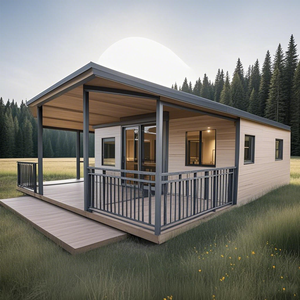
All-Weather Inclined Roof Modular Kiosk Container Extreme Climate

Waterproof Inclined Roof Heavy-Duty Kiosk Unit

High Snow Load Modular System Wind Resistant

Engineered specifically for harsh winters and heavy rain conditions. Excellent for mountainous resorts or coastal Korean deployments.

Send an Inquiry
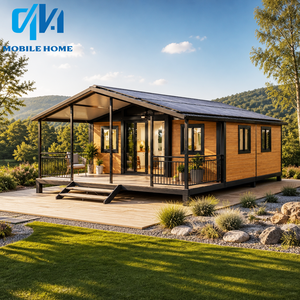
Luxury Modular Commercial Office & Ticketing Kiosk Architectural Finish

Luxury Modular Commercial Site & Kiosk Office

Modern Glazing Wood Accent Trim Plug & Play

Premium aesthetic finish suited for high-end boutique outlets, real estate sales centers, and VIP service kiosks.

Send an Inquiry
Ready To Ship Expandable Self-Service Kiosk Unit Rapid Deployment

Pre-Furnished Fast-Deploy Container Kiosk

4-Hour Setup Pre-Wired HVAC ISO Frame

Ships fully standard-container compliant. Simply unfold and connect local power utilities to commence operations immediately.

Send an Inquiry
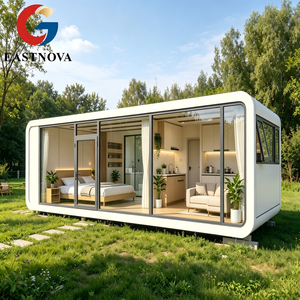
Futuristic Apple Pod Style Smart Kiosk Cabin Smart Apple Pod

Smart Apple Cabin Mobile Kiosk Pod

Curved Glass Aluminum Shell IoT Native

Futuristic curved architectural design. High visual impact for tech expos, smart-city hubs, and automated payment stations.

Send an Inquiry
Multi-Functional Expandable Commercial Container Hub Heavy Utility

Modular Multi-Unit Commercial Kiosk Facility

Combinable Units High Throughput ISO Footprint

Heavy-duty expandable modular system engineered for complex logistics hubs, multi-vendor food stalls, and ticket plazas.

Send an Inquiry
27+
Years Manufacturing (Since 1998)
500k ft²
State-of-Art Factory Facility
80%
Freight Cost Reduction (4-in-1 Stack)
100%
Korean KC/KS Code Compliance Ready
Strategic Market Intelligence

The Evolution of Kiosk Containers in South Korea’s Commercial Ecosystem

South Korea stands at the global forefront of urban automation, smart-city integration, and unmanned commercial infrastructure. Driven by high urban land values in metro regions like Seoul, Incheon, and Busan, combined with escalating labor costs and the rapid acceleration of the "unmanned store" (무인 점포) trend, traditional brick-and-mortar retail is experiencing a structural migration toward high-efficiency, small-footprint kiosk containers.

A kiosk container is no longer merely a modified steel shipping box. In the contemporary Korean business ecosystem, it represents a precision-engineered, thermally isolated, and digitalized structural unit. From self-service micro-cafes along the Han River to automated payment stations in Gangnam, unmanned logistics pickup hubs in Gyeonggi-do, and seasonal tourist booths in Jeju Island, kiosk containers provide agility that traditional construction simply cannot match.

SEO E-E-A-T Technical Insight: Deploying modular commercial units in South Korea requires strict adherence to local building thermal conductivity limits (K-Value requirements under the Building Energy Saving Design Standards), sub-zero structural freeze resilience (-15°C winter design thresholds), and seismic-load anchoring standards (KBC 2016). Sourcing directly from an established OEM/ODM manufacturer guarantees factory-integrated insulation and structural compliance prior to port arrival.

Why Korean Businesses and Municipalities Are Scaling Modular Kiosks

Procurement departments, urban developers, and franchise owners across Korea prioritize container kiosks for several key operational advantages:

  • Micro-Footprint Utilization: Maximizes revenue per square meter in densely populated commercial districts without incurring permanent civil engineering overheads.
  • Zero On-Site Disruption: Factory pre-assembly allows units to be delivered, hoisted, and operational within 4 to 8 hours, bypassing municipal noise and traffic permits required for traditional builds.
  • Structural Mobility & Asset Protection: Commercial leases in prime Korean commercial zones (such as Hongdae, Myeongdong, or Centum City) often change. Modular container kiosks can be easily folded or loaded onto flatbed cranes for relocation.
  • High Thermal & Structural Resilience: Built with heavy-gauge galvanised steel chassis, polyurethane/PIR sandwich insulation, and low-E double glazing to handle Korea’s extreme temperature swings between humid summers and freezing winters.
Technical Competencies

Engineering Features Designed for Korean Standards

Our modular kiosk architectures integrate modern smart-building technologies with rugged steel fabrication.

4-in-1 Shipping Geometry

Our patented foldable and flat-pack structures collapse to 1/4 of their expanded height, allowing four fully built kiosk frames to ship inside a single 40ft High Cube container, saving up to 80% on ocean freight to Busan or Incheon ports.

Extreme Cold & Heat Insulation

Integrated PIR/PU sandwich panels (up to 100mm option) engineered with low thermal conductivity (≤ 0.022 W/m·K), preventing internal moisture condensation during cold Korean winters.

Pre-Wired Smart Utility Channels

Factory-embedded conduit paths for high-speed Ethernet, smart security cameras, automated door locks, self-service POS kiosks, and high-capacity HVAC electrical drops matching Korea's 220V/60Hz grid specs.

Seismic & Wind Load Resistance

Full-welded galvanised carbon steel box tubing and ISO corner castings designed to withstand wind gusts up to 140 km/h (typhoon conditions) and localized seismic tremors.

Custom Commercial Frontages

Architectural glass curtain walls, hydraulic flip-up service awnings, aluminum composite panel cladding, and automated security shutters tailored to your franchise brand identity.

Factory Direct E-E-A-T Quality Control

Manufactured in our 500,000 sq ft ISO-certified facility running since 1998. Every kiosk unit undergoes water-tightness testing, structural alignment checks, and finish inspections prior to dispatch.

Local Market Deployment

High-Yield Application Scenarios Across South Korea

The versatility of modular kiosk containers makes them an asset across multiple fast-growing sectors in the Korean market. Below are the primary commercial deployment scenarios where our units deliver maximum ROI:

1. Unmanned Convenience Stores & Micro-Retail (무인 편의점)

With 24/7 autonomous shopping becoming standard across residential zones in Gyeonggi-do and Seoul suburbs, container kiosks provide a secure, plug-and-play shell. Pre-installed security wiring, automatic sliding doors, and climate control allow operators to install self-checkout stations and intelligent vending walls with minimal site preparation.

2. Smart EV Charging Hub Lounge & Kiosks

As South Korea rapidly expands its nationwide Electric Vehicle infrastructure (supported by government green initiatives), charging stations along expressways and municipal lots require driver amenity pods. Our 16ft and 20ft container kiosks function as unmanned coffee lounge modules, automated ticketing/payment booths, and maintenance control offices.

3. Seasonal Tourism & Cultural Festival Booths

Coastal areas like Busan Haeundae, Gangneung, and Jeju Island experience high seasonal influxes. Fixed concrete structures are environmentally restricted and financially impractical. Expandable and foldable container kiosks allow municipal organizers and event vendors to deploy pop-up shops, information centers, and emergency equipment hubs during peak months, collapsing them for winter storage or freighting them to the next event site.

4. Smart Construction Site Operations & Security Stations

Major infrastructure and urban redevelopment projects in Incheon Songdo and Sejong City require durable, movable site management facilities. Foldable kiosk offices provide comfortable, insulated environments for site access control, worker check-in, safety briefings, and engineering control centers that can be reused across multiple project lifecycles.
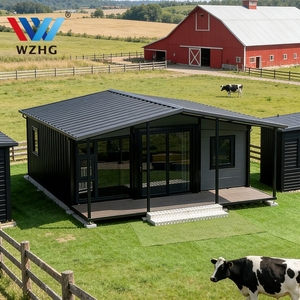
Engineering Datasheet

Standard Kiosk Container Technical Specifications

Compare our core structural systems engineered for export to Korean port terminals and regional job sites:

Technical Parameter Foldable Kiosk Series Expandable Deluxe Kiosk Smart Apple Pod Kiosk
Primary Dimensions (External) 5800mm (L) x 2500mm (W) x 2560mm (H) 5900mm (L) x 6300mm (W) x 2480mm (H) [Expanded] 5800mm (L) x 2250mm (W) x 2500mm (H)
Structural Frame Hot-dip galvanised steel, Q235B structural tube Welded heavy steel chassis + dual wing hinges Fluorocarbon sprayed aluminum alloy + steel subframe
Wall Insulation Panel 50mm/75mm EPS, Rockwool, or PIR sandwich panel 75mm Polyurethane (PU) core panels Integrated polyurethane thermal break spray layer
Flooring System 18mm Fiber cement board + MGO + PVC vinyl cladding Heavy-duty structural plywood + SPC luxury flooring Insulated composite base + waterproof SPC deck
Shipping Density 4 Units stacked per 40ft HC Container 1 Unit per 40ft HC or 40ft Flat Rack 1 Unit per 40ft HC Container
Deployment Time 4 Workers / 1 Hours 4 Workers / 1 Day Crane placement / 30 Minutes
Korean Code Compliance KC-ready wiring paths, KFI fire-rated panel option Structural calculation reports for civil approval Double glazed tempered glass (K-Value optimized)
Enterprise Manufacturing Trust

Why Direct Sourcing from PackPrefab Gives You a Competitive Edge

Navigating international supply chains for commercial prefabricated infrastructure demands a partner with proven engineering capability, scalable production capacity, and strict quality control. PackPrefab (manufactured by our parent facility operating since 1998) provides direct factory partnership without trading intermediaries.

500,000 sq ft Manufacturing Hub

Our centralized production facilities house automated laser cutting, robotic welding lines, and environmental powder coating booths, ensuring sub-millimeter tolerances on all folding hinges and corner castings.

Factory-Direct OEM & ODM Customization

Whether you require custom window cutouts, integrated hydraulic display counters, specialized branding colors, or pre-installed plumbing for kitchen sinks, our in-house architectural team tailors units to your exact CAD/BIM drawings.

Seamless Logistics to Busan & Incheon Ports

We handle export clearance, container packing optimization, and maritime documentation, delivering container kiosks directly to major South Korean ocean terminals with short lead times.

Procurement Guidance

Frequently Asked Questions by Korean B2B Buyers

Q What permits are required to install a kiosk container on commercial land in Korea?
In South Korea, container kiosks are typically classified as temporary structures (가설건축물). Requirements vary by district office (구청). Generally, you must submit a temporary building declaration along with site layout plans and structural specifications. Because our units are built on standardized steel chassis and can be moved, approval is significantly simpler and faster than for permanent brick-and-mortar buildings. We provide complete dimensional and CAD drawings to assist your local permit expediter.
Q How do PackPrefab kiosk containers withstand freezing Korean winters (-10°C to -15°C)?
Our units feature continuous thermal break designs using high-density polyurethane (PU) or Rockwool core sandwich panels (up to 75mm or 100mm thickness). All wall joints are fitted with commercial EPDM double-lip gaskets to eliminate cold bridges and prevent interior air leakage, guaranteeing manageable heating costs and zero interior wall frosting during harsh winter months.
Q Can the electrical wiring be customized for Korean 220V / 60Hz equipment and KC standards?
Yes. We regularly supply Korean buyers with customized electrical conduit layouts, pre-wired junction boxes, breaker panels, and outlet cutouts compatible with Korean KC safety standards and 220V/60Hz grid setups. Heavy electrical channels can also be isolated for high-draw equipment such as commercial espresso machines, soft-serve ice cream freezers, or fast-charging systems.
Q How many foldable kiosk units fit into a single shipping container?
Because our foldable kiosk modules collapse to roughly one-quarter of their open operational height, four folded units stack neatly into a single 40ft High Cube (HC) sea container. This quadruples your ocean shipping efficiency and significantly lowers import logistics overhead per unit when shipping to Busan or Incheon port.
Q What foundation prep is required before delivering the kiosk container to a site?
Due to the rigid welded steel base frame, a full poured concrete slab is rarely required. Most Korean operators utilize level concrete corner footings, concrete paving blocks, or adjustable heavy-duty steel screw piles. This allows quick setup on asphalt parking lots, unpaved commercial plots, or gravel surfaces with minimal site disruption.
Q What is the typical manufacturing lead time and shipping duration to South Korea?
Standard production cycles for customized kiosk orders take between 15 to 25 days depending on total order volume. Ocean freight transit from our port hub to Busan or Incheon typically takes only 3 to 7 days, making sea delivery remarkably fast and efficient for Korean buyers.

Request Custom Quotation & Technical Drawings

Planning a retail roll-out, unmanned store network, or commercial project in Korea? Contact our engineering team for instant technical consultations and competitive factory-direct pricing.