
Navigating the Chilean Modular & Prefab Cabin Market: OEM/ODM Structural Engineering Guide
Chile represents one of the most demanding geographic and structural markets for modular architecture globally. Spanning over 4,300 kilometers from the hyper-arid Atacama Desert in the north to the subpolar sub-antarctic fjords of Patagonia in the south, the country presents extreme environmental variables: UV radiation, extreme thermal diurnal shifts, heavy Andean snowloads, coastal salt spray, and intense seismic activity. Procurement directors, mining camp developers, eco-tourism resorts, and residential builders in Chile require modular cabin solutions that transcend standard pre-engineered shelter concepts.
Seismic Resistance & Structural Engineering Standards
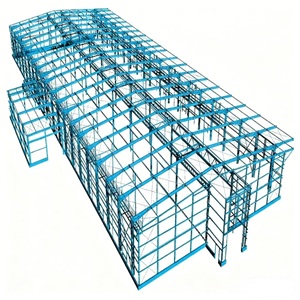
Building in Chilean urban hubs such as Santiago, Concepción, or Antofagasta—as well as high-altitude mining enclaves like Calama—demands rigorous compliance with local structural codes. Traditional masonry and unreinforced modular structures suffer severe cracking under lateral seismic acceleration. PackPrefab’s engineering methodology relies on integrated 3D structural modeling (SAP2000 / ANSYS) to evaluate natural vibration periods, base shear capacity, and story drift limits.
Our OEM/ODM manufacturing line incorporates welded box-section columns linked to perimeter rim beams with high-tensile Grade 8.8 structural bolts. This semi-rigid frame topology absorbs dynamic energy, maintaining structural integrity across seismic events exceeding 8.0 on the Moment Magnitude scale without structural collapse. When importing cabins through major Chilean ports such as San Antonio or Valparaíso, local structural engineers can readily review our calculation packages to expedite Permiso de Edificación approval through municipal Dirección de Obras Municipales (DOM).
Thermal Envelope & Microclimate Adaptation (OGUC Standards)
Thermal insulation specs must comply with Chile's Ordenanza General de Urbanismo y Construcciones (OGUC), specifically Article 4.1.10 regarding thermal envelope requirements across Chile’s 7 distinct thermal zones (Zone 1 Desert North to Zone 7 Extreme South). Standard single-skin container conversions suffer from severe thermal bridging, condensation accumulation, and excessive heating/cooling energy loads.
| Chilean Thermal Zone | Representative Region | Wall Panel Spec | Core Material Option | Thermal Transmittance (U-Value) |
|---|---|---|---|---|
| Zone 1 & 2 (Northern Desert) | Antofagasta, Iquique, Atacama | 75mm PIR Sandwich Panel | Polyisocyanurate (High UV Resistance) | 0.28 W/m²K |
| Zone 3 & 4 (Central Valley) | Santiago, Valparaíso, Rancagua | 75mm High-Density EPS | Expanded Polystyrene (Self-Extinguishing) | 0.35 W/m²K |
| Zone 5 & 6 (Southern Lakes) | Concepción, Puerto Montt, Valdivia | 100mm Mineral Rockwool | Basalt Rockwool (Fire & Moisture Proof) | 0.22 W/m²K |
| Zone 7 (Extreme Patagonia) | Punta Arenas, Coyhaique, Torres del Paine | 120mm Structural Insulated PIR/PU | Polyurethane + Double Low-E Argon Glazing | 0.16 W/m²K |
By customizing insulation thickness, gas-filled double-glazed tempered glass fenestration, and continuous thermal breaks at structural joints during the factory OEM process, PackPrefab cabins maintain indoor thermal comfort while dramatically lowering operational HVAC costs in remote off-grid locations.